This isn't a cave—it’s an 18-story subterranean metropolis with ventilation shafts, wine cellars, and schools. It was carved into the rock thousands of years ago so an entire civilization could vanish from the surface at a moment's notice. Imagine a place where 20,000 souls could simply disappear, not into thin air, but into the very earth itself, living out their lives in absolute secrecy. This isn’t the plot of a sci-fi novel; it’s Derinkuyu, hidden beneath the unassuming plains of Turkey’s Cappadocia region, and it demands to be seen by anyone who dares to delve beneath the surface of conventional travel.
Forget what you think you know about ancient settlements. Derinkuyu is an architectural marvel that puts many modern feats to shame. Descending into its cool, quiet depths, you’ll find intricately designed living quarters, stables large enough for livestock, storage rooms packed with provisions, and even chapels. The most astounding part? A sophisticated ventilation system, featuring a central shaft extending 250 feet down, ensuring every level received fresh air. It’s a testament to human ingenuity and, frankly, paranoia, built not for comfort, but for absolute survival against unseen threats.
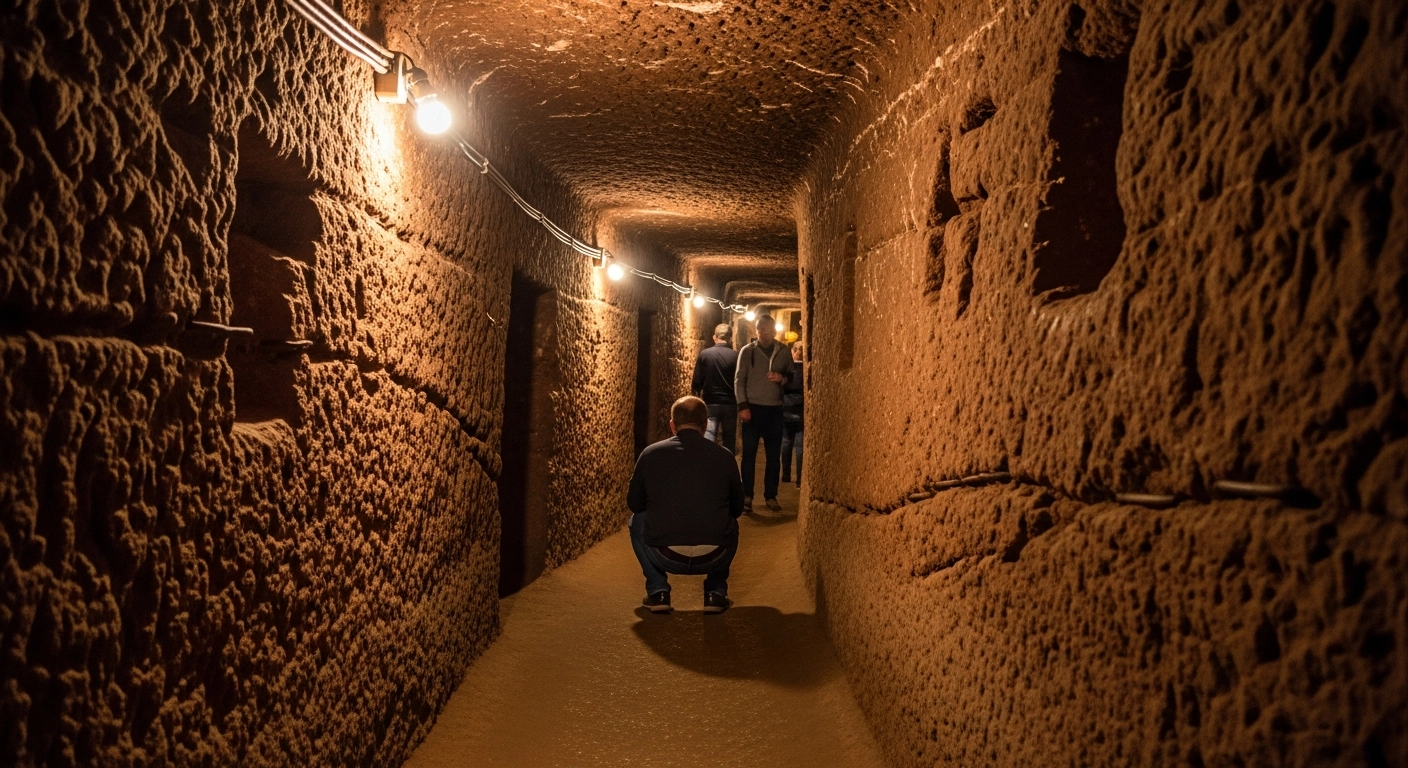
Navigating Derinkuyu is an experience unto itself, a physical and psychological journey. Passages narrow to shoulder-width, forcing visitors into single file, sometimes stooping low through ancient doorways. The initial awe quickly gives way to a profound sense of claustrophobia for some, as the weight of the earth presses in. Yet, the air remains surprisingly fresh, a bizarre comfort. This isn't your typical leisurely stroll through ruins; it’s an immersive dive into a forgotten world, where echoes of lives lived in darkness seem to cling to the tuff rock walls. Prepare to feel small, isolated, and undeniably humbled.
The million-dollar question: who carved this colossal refuge, and why? Historians generally credit the early Phrygians, around the 8th to 7th centuries BC, with initiating its construction, later expanded by various groups, including early Christians fleeing Roman persecution and subsequent invaders. This city was no mere hideout; it was a self-sustaining fortress designed for long-term evasion. Massive, round stone doors, reminiscent of giant millstones, could be rolled from the inside to block passages, sealing off sections against intruders. It’s a stark reminder of humanity's enduring struggle for survival, a history literally etched in stone.
For American travelers, the journey to Derinkuyu typically begins with a flight to Istanbul (around 9-11 hours), followed by a domestic flight to Kayseri (ASR) or Nevşehir (NAV), roughly an hour. From there, it's about an hour's drive to Göreme, the heart of Cappadocia, where most budget-friendly accommodations are. Renting a car (around $30-50/day) gives you ultimate flexibility to explore Derinkuyu and the surrounding region, far outperforming pricier organized tours or navigating patchy local buses. The entrance fee to Derinkuyu itself is modest, currently around 60 Turkish Lira (TL), which is less than $2 USD, a steal for such an incredible site. Save your money on lavish tours and invest in a good map and an audio guide instead, or simply soak it in.
Timing your visit between March and June is arguably the sweet spot for Cappadocia and Derinkuyu. The weather is delightfully mild, averaging 50-75°F (10-24°C), perfect for exploring above ground and comfortable for the cool underground climate. Crucially, you'll dodge the brutal summer heat and the thickest crowds of July and August. While prices for flights and cave hotels in Göreme will be on an upward trend from early spring to early summer, they won't have reached their peak yet, offering a reasonable balance between good weather and manageable costs. Just remember to book your internal flights and accommodations a few months out to lock in better rates.
While Derinkuyu gets the lion's share of attention, don't overlook Kaymaklı Underground City, just 10 kilometers north. It’s a slightly different experience, generally considered more labyrinthine and with a distinct atmosphere. Less dramatic in depth, Kaymaklı feels more like a lived-in village underground, with its own fascinating layout. It provides a unique contrast to Derinkuyu's more military-fortress vibe, often with slightly fewer crowds, allowing for a more reflective exploration of these subterranean worlds without the constant elbow-to-elbow shuffling.
To truly appreciate the incredible geology of Cappadocia, balance your underground explorations with a hike through the Ihlara Valley. This wasn't on every tour bus itinerary when I last visited, and it’s a shame. This stunning canyon, carved by the Melendiz River, stretches 14 kilometers and is dotted with ancient rock-cut churches, many adorned with frescoes. It's an invigorating escape into nature, offering breathtaking views, refreshing breezes, and a serene counterpoint to the confined spaces of the underground cities. A full-day excursion here, including a simple, authentic village lunch, is not just budget-friendly but deeply enriching.
For a hands-on cultural immersion, head to Avanos, a town famous for its red clay pottery, sourced from the Kizilirmak (Red River). Instead of just buying a souvenir, find a local workshop that offers classes. For a small fee, you can sit at a potter's wheel and try your hand at crafting. It’s an intimate, often humorous, interaction with local artisans who are eager to share their craft. You'll gain a deeper appreciation for the region's traditions and perhaps walk away with a wonky, but personally meaningful, ceramic piece that tells a story far beyond its monetary value.
A few critical tips for navigating this unique landscape: If you have severe claustrophobia, Derinkuyu might not be for you, or consider only dipping into the upper levels. Wear layers; it’s cool underground, but often warm and sunny above. Always carry a small backpack with water and some snacks, especially if you’re self-driving to more remote sites. While English is spoken in tourist hubs, learning a few basic Turkish phrases (hello, thank you, please) goes a long way and is always appreciated by locals. For budget-conscious dining, seek out "esnaf lokantası" (tradesmen's restaurants) for delicious, affordable home-style Turkish food, a far cry from tourist trap menus.
Derinkuyu isn’t just an old hole in the ground; it’s a profound testament to human resilience, ingenuity, and the sheer will to survive. It challenges your perceptions of what ancient civilizations were capable of and leaves you pondering the lives of those who vanished into its depths for protection. To walk through its silent passages is to touch a hidden truth of history, an unsettling, awe-inspiring experience that few other places on Earth can offer. So, pack your bags, prepare to stoop a little, and descend into one of the world's most incredible, and untold, travel stories.