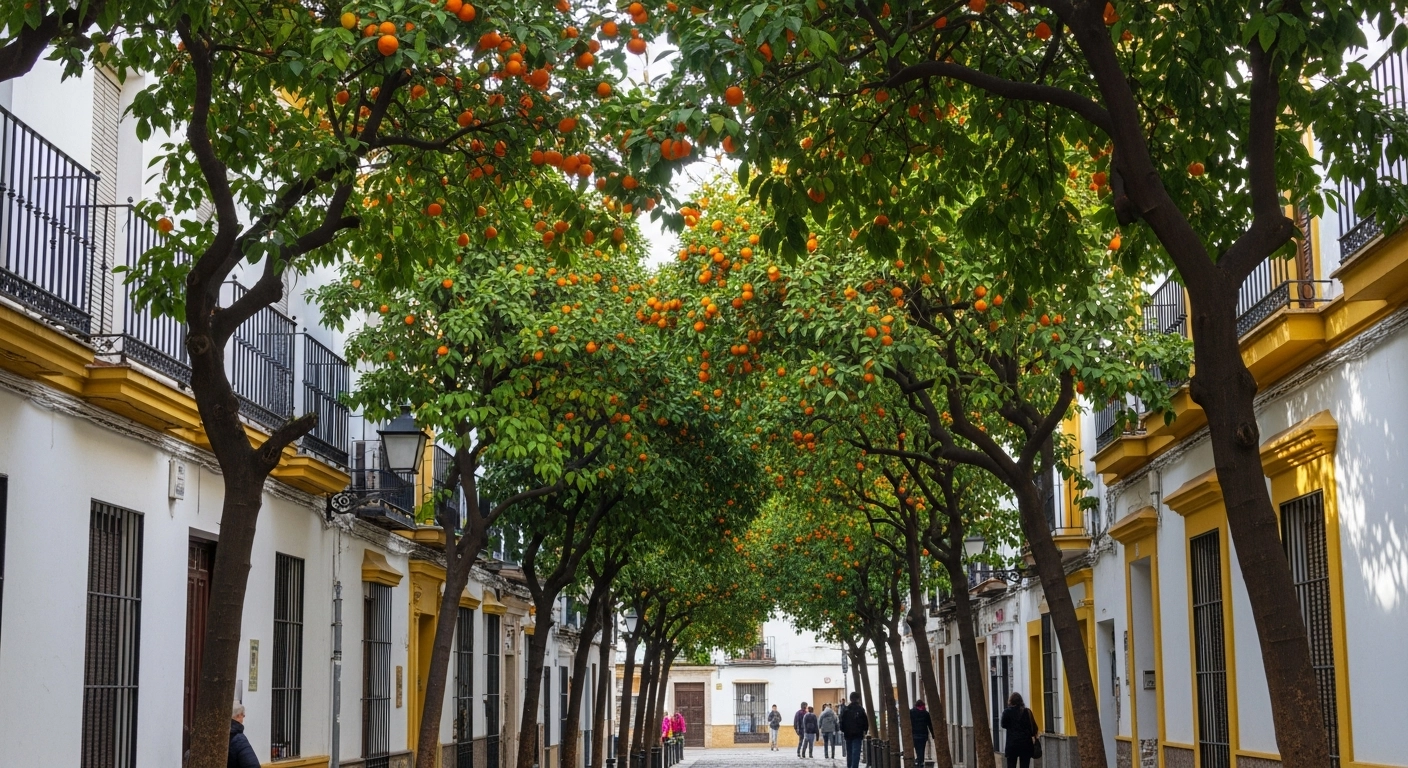
Seville, Spain, is a city that thrives on vivid contradictions, but few are as striking as its omnipresent orange trees. Stroll through almost any street, plaza, or courtyard in spring, and you'll find yourself under a canopy of vibrant green leaves studded with some 40,000 gleaming, golf-ball-sized oranges. Your first, entirely natural, instinct might be to pluck one and enjoy a refreshing snack in the Andalusian sun. Don't. You'd quickly discover why this city, famous for its beauty, also holds a secret: these are bitter oranges, too sour to eat, destined instead for an unexpectedly sophisticated fate across the English Channel. It’s a bizarre, beautiful circular economy where Seville’s shade literally ends up as marmalade on a breakfast table in London, a quirk that, once discovered, reframes your entire experience of the city.
This curious botanical arrangement isn't just for show; it's a testament to Seville’s ability to turn an ancient tradition into a practical, and aesthetically pleasing, urban solution. These trees, originally brought by the Moors, provide vital shade from the brutal summer sun, their blossoms perfume the air in late winter, and their fruit, once too abundant to handle, now fuels a profitable export industry. For American travelers accustomed to neatly trimmed park trees, this organic integration of utility and beauty is a refreshing, if initially confusing, spectacle.
Planning your trip for March through June is a smart play, sidestepping the blistering July and August heat that can feel like walking into a blast furnace. Early spring, particularly March and April, offers milder temperatures, often hovering in the pleasant 60s and 70s Fahrenheit, making it perfect for endless walking. By May and early June, temperatures will climb into the 80s, sometimes pushing 90, but the dry heat is still more manageable than later in the summer. Just be prepared for the crowds, as spring is prime season. Expect roughly 8-10 hours of flight time from major East Coast U.S. cities, often with a layover, so factor in a full travel day on either end.
While Seville is undoubtedly popular, dodging the peak tourist crush and its associated price hikes is entirely doable. Forget the generic advice to simply "book early"; aim for accommodations slightly outside the immediate historical center. Areas like Triana, across the Guadalquivir River, or the Macarena district offer a more authentic vibe with better value for money, often just a 15-20 minute walk from the main attractions. If you do stay central, consider a charming guesthouse over a chain hotel; their breakfasts are often simple but locally sourced and surprisingly hearty, saving you a few euros daily.
Eating your way through Seville doesn’t have to drain your wallet. The city’s tapas culture is your best friend. Skip the fancy sit-down restaurants in tourist squares and instead hop between several small, local tapas bars. Look for places where the locals are standing, tossing napkins on the floor – a sign of a good, bustling spot. Many offer a "menu del día" for lunch, a fixed-price, multi-course meal that provides incredible value, usually including a drink and dessert for under €15. A pitfall to avoid: overpaying for sangria. It’s often a sugary tourist trap. Instead, embrace sherry (fino or manzanilla) or a crisp local beer (Cruzcampo is ubiquitous and cheap) for an authentic, wallet-friendly refreshment.
Beyond the usual suspects like the Alcázar and Seville Cathedral, which you should absolutely see, some of Seville’s true magic lies in its less-trodden paths. Start your day with a visit to the Triana Market, just across the Puente de Triana. Unlike polished, tourist-centric markets, this is where Sevillanos actually shop. Wander through stalls piled high with fresh produce, regional cheeses, cured meats, and freshly caught seafood. Grab a coffee and a pastry, watch the daily rhythm, or settle into one of the tiny, no-frills tapas bars hidden within the market for an incredibly fresh and affordable breakfast or lunch. It's a sensory immersion, a stark contrast to the historical grandiosity elsewhere.
For a dose of serene beauty that often gets overlooked, make your way to the Casa de Pilatos. While the Royal Alcázar demands attention, this 16th-century palace is a quieter, equally stunning blend of Mudéjar, Renaissance, and Gothic styles. Its tiled courtyards, lush gardens, and intricate stucco work offer a more intimate glimpse into Sevillian aristocratic life without the throngs of tourists. It’s a place to linger, to absorb the peaceful atmosphere, and appreciate the artistry often overshadowed by its royal counterpart. The entrance fee is modest, a fraction of what you’d pay for other major attractions.
Another worthwhile, contrasting experience is the Metropol Parasol, affectionately known as Las Setas (The Mushrooms). While many head up for the panoramic sunset views (which are indeed spectacular), go early in the morning for fewer crowds and a different perspective. But don't miss the Antiquarium underneath, where well-preserved Roman and Moorish ruins are displayed. It’s a fascinating juxtaposition: ancient foundations supporting a futuristic wooden structure, a physical metaphor for Seville’s blend of old and new. For an even more tranquil escape, dedicate an afternoon to Parque de María Luisa beyond just the famous Plaza de España. Rent a rowboat on the canal, but then venture into the park's less-explored corners – find the shaded walkways, the hidden ponds, and the smaller, intricately tiled fountains. It's a vast green lung, a testament to thoughtful urban design, offering solace and quiet contemplation amidst the city's vibrant energy.
Ultimately, Seville is a city of layers, where a vibrant present is deeply rooted in a rich past. The orange trees aren't just street decorations; they're living symbols of a city that constantly reclaims and redefines its heritage. Visiting Seville in spring means experiencing it at its most fragrant and visually stunning, while also having the opportunity to peel back those layers, from the literal bitter fruit to the hidden markets and palaces. It's an immersive journey that challenges your expectations and leaves you with a taste of something truly unique, far beyond what any glossy travel brochure could ever convey.