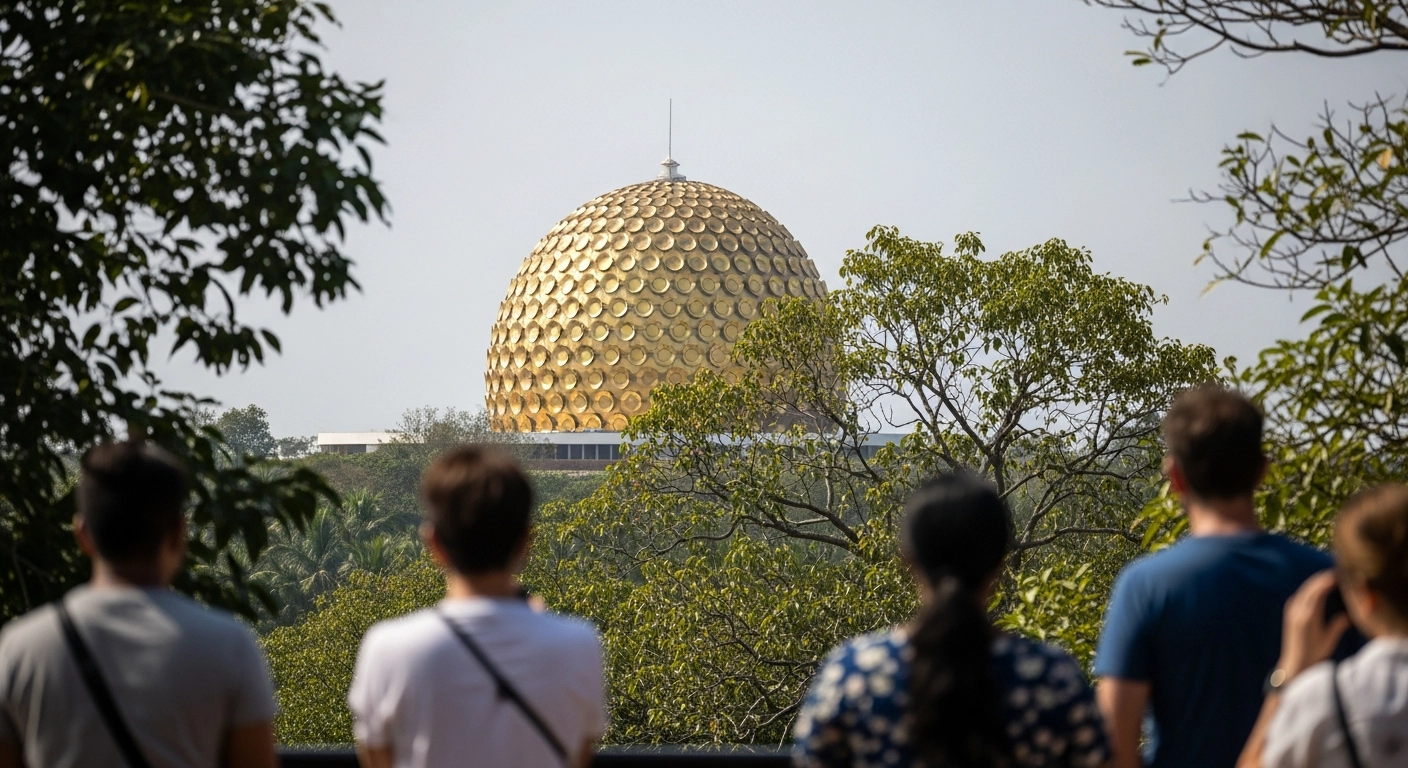
Can you imagine a city with no money, no politics, and no religion? Most people can’t, but then most people haven’t heard of Auroville, India. Created as an experimental "universal township," residents from 50 nations live here without any private property or currency. It is a functional utopia built around a giant gold sphere that looks like a spaceship landed in the jungle, a stark contrast to the chaotic vibrancy of the rest of India. This place isn't just a destination; it’s a living question mark on the face of conventional society.
Getting to this unconventional experiment often means a long-haul flight from the U.S. to Chennai, then a two-to-three-hour taxi ride south to Pondicherry, with Auroville just a stone's throw away. Don't expect to waltz in and immediately understand its inner workings. While residents operate on an internal credit system and lack private property, visitors like us still need good old Indian rupees. Your “no money” experience is primarily an observation, not a participation. Expect to pay for guesthouses – which range from basic to surprisingly upscale – food, and any workshops or experiences you partake in. A decent guesthouse might set you back $20-50 a night, but budget-conscious travelers can find simpler rooms for less, especially if booked well in advance through the Auroville official channels.
The season from March to June presents a unique challenge for American travelers: it’s brutally hot and humid. And I mean brutal. Think temperatures regularly hitting the high 90s Fahrenheit, often well into the 100s, with humidity that feels like a wet blanket. This is not the season for casual afternoon strolls unless you're actively seeking heatstroke. However, there's a silver lining: fewer crowds. The scorching sun means many tourists shy away, leaving the pathways to the Matrimandir and the quieter corners of Auroville relatively unmolested. Prices for accommodation can also be marginally lower as guesthouse owners struggle to fill rooms during this off-peak inferno. Prioritize air-conditioned stays, plan your activities for early mornings or late evenings, and hydrate constantly – this is non-negotiable.
Beyond the iconic Matrimandir – the "Soul of Auroville" and its silent, gold-plated centerpiece for concentration, not worship – there are several overlooked experiences that offer a deeper understanding of this living experiment. First, consider a visit to the Auroville Earth Institute. Here, you’ll witness cutting-edge sustainable architecture and learn how they are literally building a future city with locally sourced, eco-friendly materials. It's a stark, practical contrast to the aspirational ideals. Second, explore the Quiet Healing Center. Tucked away in the green belt, this tranquil space offers various holistic therapies, from Ayurvedic treatments to Watsu. It’s a physical manifestation of Auroville’s focus on well-being and a genuine escape from the heat and mental noise of travel.
For those craving a dose of local culture and a break from the experimental township, a trip to Serenity Beach is a must. Just a short scooter ride away (renting a scooter or bicycle is the most practical way to navigate Auroville), you’ll find a less-visited stretch of coastline dotted with local fishing boats. It’s a chance to interact with the Tamil community living adjacent to Auroville, witness daily life, and enjoy fresh seafood at a fraction of the cost you'd find in tourist traps. Lastly, don't miss the chance to visit one of the smaller, independent craft units, like those producing handmade paper or pottery. These aren’t always heavily promoted, but they offer direct insight into the skill-based, self-sustaining economy that underpins Auroville’s resident life, and you can often buy unique, ethically produced souvenirs directly from the artisans.
Navigating Auroville requires a certain mindset. This isn't a theme park; it's a social experiment in progress. While the core ideal is unity and peace, don’t expect a perfect, frictionless paradise. It’s a community of humans with all their complexities. Respect residents' privacy, especially around their living units. Understand that the Matrimandir requires quiet contemplation; talking or photography inside is strictly forbidden. The “no politics, no religion” mantra means it strives to transcend divisive conventional systems, not that it’s devoid of internal governance or spiritual pursuit. It’s an exercise in human evolution, with its own internal challenges and debates, a nuanced reality often glossed over in glossy travel brochures.
Financially, staying within budget means embracing local transport – walking, bicycles, or rented scooters. Public transport is minimal. Eating at the various community-run canteens or smaller, local eateries will always be cheaper and often more authentic than the cafes catering directly to tourists. While volunteering is an option for longer stays, a short visit is best for observation and appreciating the unique endeavor. Auroville truly challenges your preconceived notions of what a city can be. It's a place where an ambitious dream is being built, brick by sustainable brick, offering a peek into an alternative future – a challenging, hot, but utterly fascinating experience that will leave you pondering long after you've left its golden sphere behind.