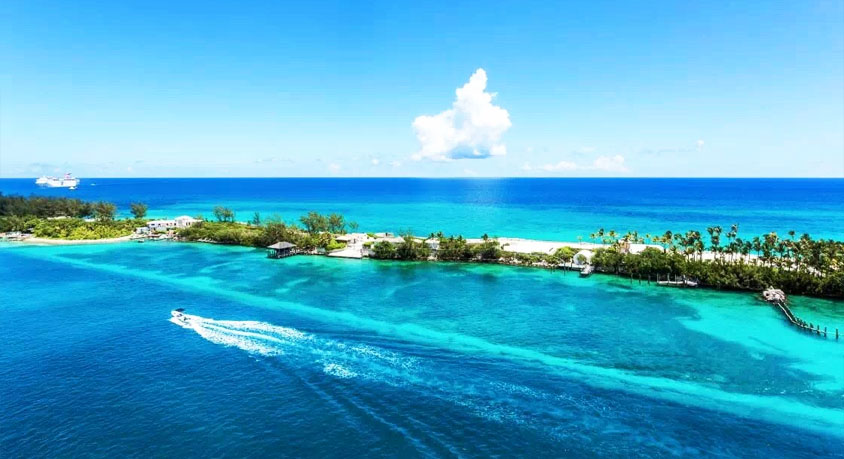
The steering wheel felt slick in my palms as I sat idling on a strip of asphalt barely wider than a standard driveway. To my left, the Atlantic Ocean was a churning, angry indigo, throwing thirty-foot salt-sprayed fists against the cliffs; to my right, the Caribbean Sea sat as still and pale as a bowl of peppermint mouthwash. This is the Glass Window Bridge on Eleuthera, a place where the geography is so thin it feels like the island is holding its breath.
I watched a local in a battered Nissan wait for a lull in the spray, then gun it across the bridge with a casualness that made my stomach do a slow roll. There is no guardrail to save you from the "rogue" waves that have, historically, tossed heavy vehicles into the abyss like they were Matchbox cars. It was at that moment, with the spray hitting my windshield and the contrast of the two blues burning into my retinas, that I realized I had finally escaped the sterile, cruise-ship-clogged version of the Bahamas that most Americans think is the only one that exists.
Most people fly into Nassau and never leave the $500-a-night orbit of a resort that charges twenty dollars for a bottle of water, but I dragged my family onto a Silver Airways puddle-jumper for a sixty-minute flight that felt like traveling back forty years in time. Eleuthera doesn't have a single traffic light, and the "airport" in North Eleuthera is essentially a shed with a very friendly lady holding a clipboard. We skipped the $120 taxi ride to the middle of the island—a blatant "tourist tax" for anyone who doesn't look like they know where they're going—and rented a high-clearance SUV from a local guy named Gregory. It cost us $70 a day, which sounds steep until you realize the "roads" here are mostly limestone potholes designed to snap the axle of any sedan. Gregory handed me the keys and told me, "If the Atlantic is white, don't cross the bridge," then walked away without even checking my ID. That’s the Bahamian version of a rental agreement.
Staying at a boutique guesthouse in Governor’s Harbour cost us $160 a night, which is a steal compared to the $600-plus you'd drop on neighboring Harbour Island. We spent our mornings at the Friday Night Fish Fry, where the "tourist" plate of snapper is $25, but if you stand in the line with the locals and order the "snack" size, you get the same heap of peas and rice and fried fish for $12. The secret to surviving the Bahamas financially is realizing that everything imported from the States is triple the price. A box of Cheerios in the local grocery store was $14, so we pivoted to eating "Boiled Fish" and johnnycakes for breakfast at a roadside stand for $7. It’s salty, spicy, and keeps you full until dinner, which is more than I can say for a $30 resort continental breakfast.
We spent an afternoon at the Queen’s Bath, a series of natural rock pools just south of the bridge that most tourists miss because they’re too busy taking selfies on the bridge itself. You have to time the tide perfectly—if it’s high, the Atlantic waves crash into the pools with enough force to grate you against the coral like cheese. We arrived at low tide, soaking in sun-warmed mineral water while watching the ocean explode just a few feet away. It cost us nothing but the gas to get there. Later, we found Preacher’s Cave on the north end, a massive limestone cathedral where shipwrecked settlers lived in the 1600s. There’s no gift shop, no ticket booth, and no tour guide breathing down your neck—just the echo of the wind and the feeling that you’ve stumbled onto something the tourism board forgot to monetize.
Walking through the Leon Levy Native Plant Preserve was the only time we "paid" for nature, a $10 entry fee that goes toward conservation. It’s an island-wide irony: the most expensive things in Eleuthera are the manufactured comforts, while the most stunning experiences are free or hidden behind a thicket of brush. For transportation, we learned quickly that walking is only for the beaches. The island is 110 miles long and as thin as a toothpick; trying to navigate the "Queen’s Highway" on foot is a recipe for heatstroke. We saw a couple from Florida trying to bike it and they looked like they were reconsidering every life choice they had ever made. Use the SUV, pay the local gas prices—which are about two dollars higher than in the States—and consider it the price of freedom.
If you’re coming from New York or Miami, avoid the "shoulder" months of late summer unless you want to spend your entire vacation tracking a tropical depression on a radar app. We went in late spring, just as the winter crowds from the posh Harbour Island retreats were thinning out. The humidity was starting to bite, but the water in the Caribbean side was so warm it felt like bathwater. You’ll need a waterproof dry bag because when the rain comes, it doesn't drizzle; it dumps. Everything we owned was soaked within five minutes of our first hike, but the locals just laughed and kept walking.