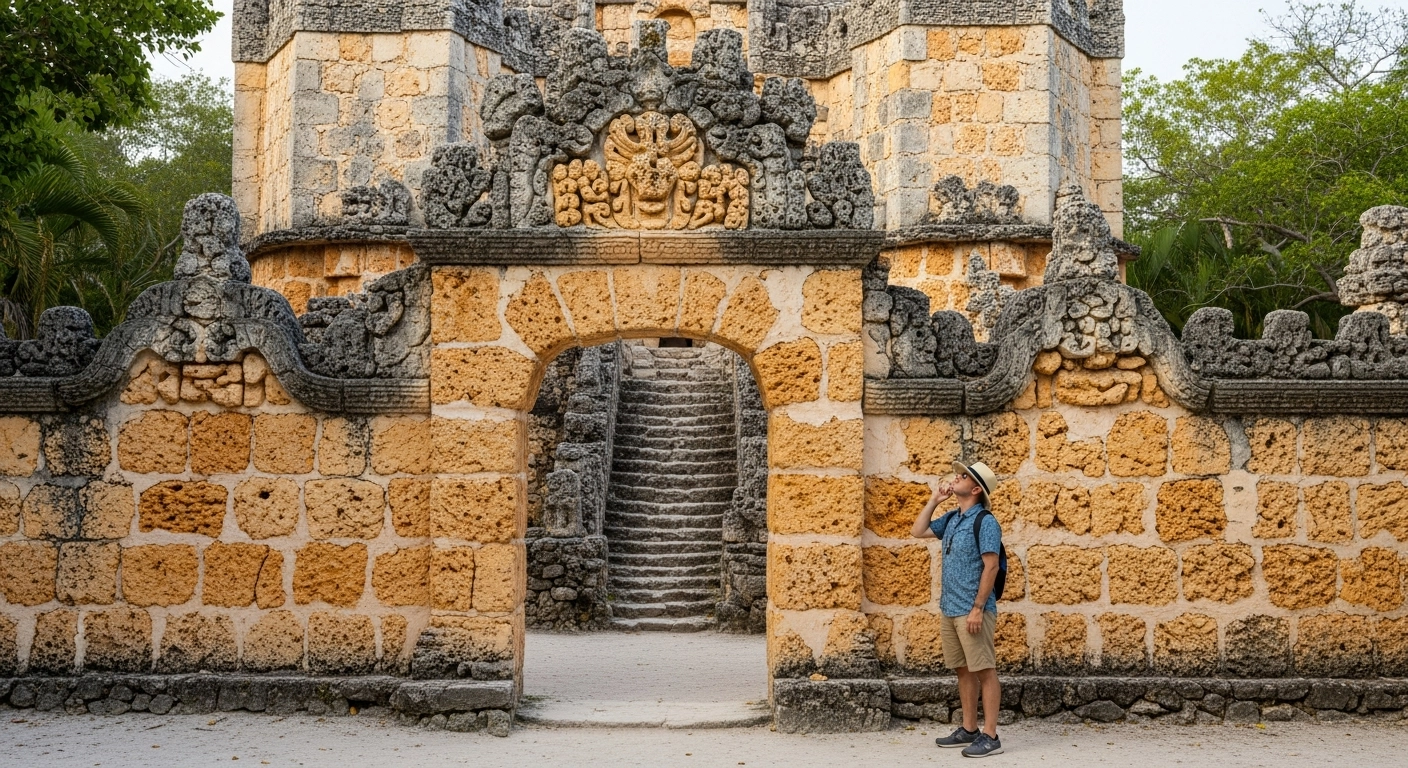
Imagine this: no cranes, no heavy machinery, and absolutely no outside help. Just one heartbroken man, weighing barely 100 pounds, single-handedly moving over 1,100 tons of coral rock, often under the cloak of night. He built a 9-ton stone gate so perfectly balanced that you can spin it with the lightest touch of a finger, and to this day, engineers worldwide scratch their heads in utter disbelief. Welcome to Florida’s Coral Castle, a monument to a love lost and an engineering feat that stubbornly defies every known law of physics. It’s the kind of place that sticks with you, not for its grandeur, but for the sheer, baffling impossibility of its existence.
Edward Leedskalnin, a Latvian immigrant, started this colossal endeavor in the 1920s, supposedly after his "sweet sixteen" fiancée broke off their engagement. For decades, he toiled alone, extracting massive blocks of Oolitic limestone – often mistakenly called coral – from his property and shaping them into intricate sculptures, walls, and furniture. His tools? Simple hand tools, some lever arrangements, and perhaps, a secret that died with him. Visiting Coral Castle isn't just seeing rocks; it’s confronting a tangible enigma, a physical representation of human will and sorrow. Forget the glitz of South Beach; this is where Miami gets truly weird.
For American travelers considering a visit between March and June, timing is crucial. While flights into Miami International Airport (MIA) are generally accessible from most major U.S. hubs, getting to Coral Castle means an additional 45-60 minute drive south to Homestead. Admission typically hovers around $18-20 for adults, which, for a place explored thoroughly in about 90 minutes, might feel steep. However, view it as an investment in a truly unique story. My budget-conscious tip: pack your own snacks and drinks. The gift shop is charming but pricey, and a cold bottle of water will be your best friend in the South Florida heat. Don't expect a full-day theme park; this is a focused historical marvel.
March offers pleasant weather, but also peak Spring Break crowds, meaning more jostling for a clear view and potentially higher local accommodation rates. By May and June, crowds thin considerably, but the oppressive humidity and soaring temperatures truly kick in. Visiting early in the morning, right when they open, or later in the afternoon before closing, is non-negotiable if you want to avoid the full brunt of the sun and tour bus hordes. The stillness of an early morning walk through the grounds, with the air still relatively cool, allows for a more contemplative appreciation of Edward’s incredible work. This contrast between quiet mornings and midday tourist rush highlights the importance of strategic planning.
Beyond the magnetic gate, take your time to examine the details: the hand-carved rocking chairs, the astronomical instruments, and the curious "Polaris telescope" perfectly aligned with the North Star. One often-overlooked detail is the precision with which Edward oriented many of his pieces. His understanding of celestial mechanics, or at least his meticulous attention, adds another layer to the mystery. Don't just walk past the nine-ton gate; stand beside it, imagine a hundred-pound man maneuvering it, and then give it a gentle push. The smooth, almost effortless pivot is genuinely astonishing, a tangible defiance of gravity that leaves a lasting impression. This isn't just a collection of big stones; it's a meticulously crafted universe.
Once you've pondered Edward's secrets, the surrounding Homestead area offers some delightful, often-missed experiences. First, detour to Robert Is Here Fruit Stand, a legendary local institution just minutes away. This isn't your average grocery store; it’s a roadside marvel offering exotic tropical fruits, incredible milkshakes (try the Key Lime!), and a small petting zoo. It's a genuine slice of old Florida, providing a delicious and budget-friendly contrast to the castle's solemnity. Second, embrace the wild a bit further south by entering Everglades National Park via the Ernest Coe Visitor Center. While airboat tours can be pricey, a drive to the Anhinga Trail offers fantastic, free opportunities to spot alligators, turtles, and diverse birdlife in their natural habitat. It's a stark, beautiful contrast to the precise geometry of the castle, reminding you of Florida's untamed natural side. Finally, for a truly local taste, consider a visit to Schnebly Redland's Winery & Brewery. This isn’t Napa; it's unique wines and craft beers made from locally sourced tropical fruits like lychee, avocado, and starfruit. It’s an unexpected and refreshing palate cleanser, revealing another facet of South Florida's agricultural ingenuity.
The enduring myth surrounding Coral Castle often emphasizes the heartbreak, but the true value lies in the unanswered questions. Was it ancient knowledge? Reverse magnetism? Some forgotten lever system? The lack of a definitive answer allows our imaginations to run wild, transforming a simple collection of stones into a philosophical puzzle. This isn't a destination to simply "see" but to experience and question. It challenges our assumptions about what's possible, a quiet, monumental testament to a man who, against all odds, chose to move mountains, one coral block at a time. It’s a journey not just to a place, but into the depths of human potential – or perhaps, obsession – that Miami’s glitzy facade usually hides.