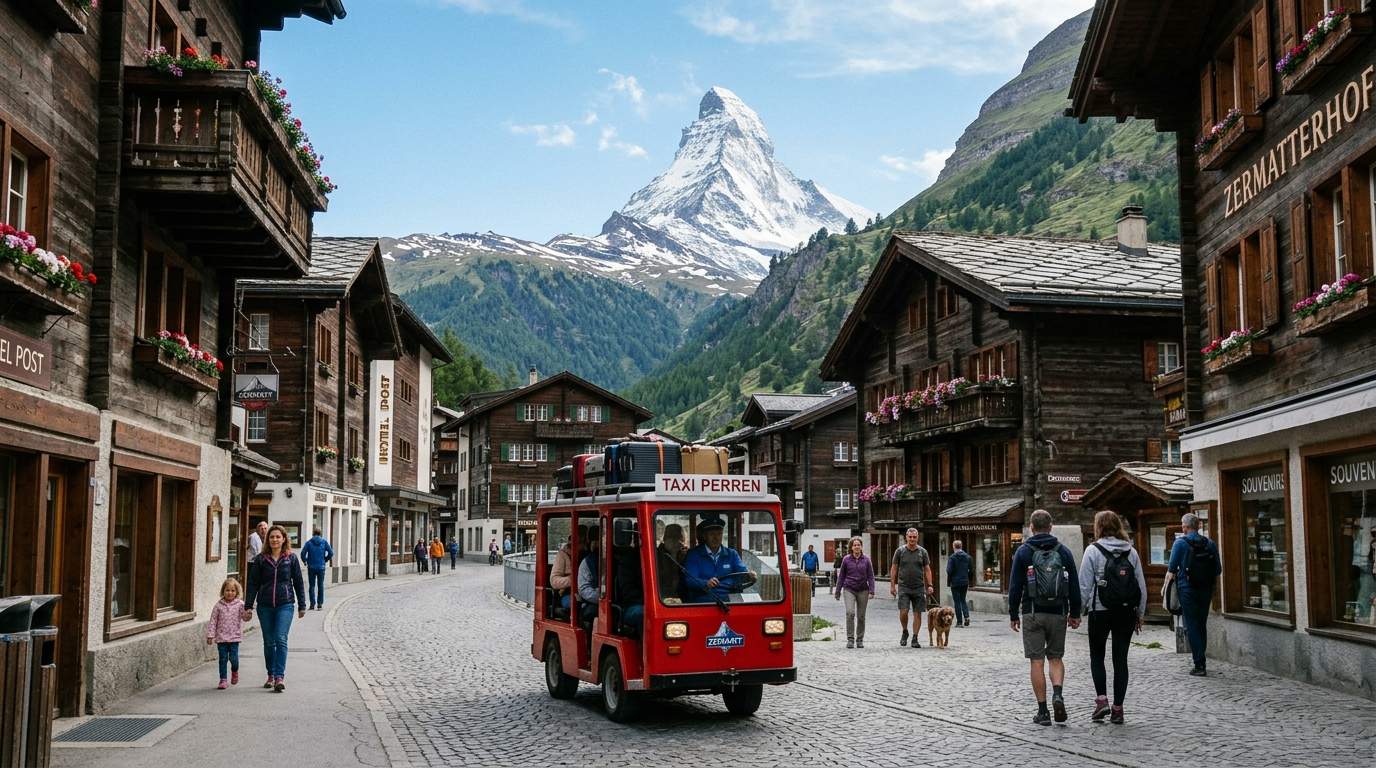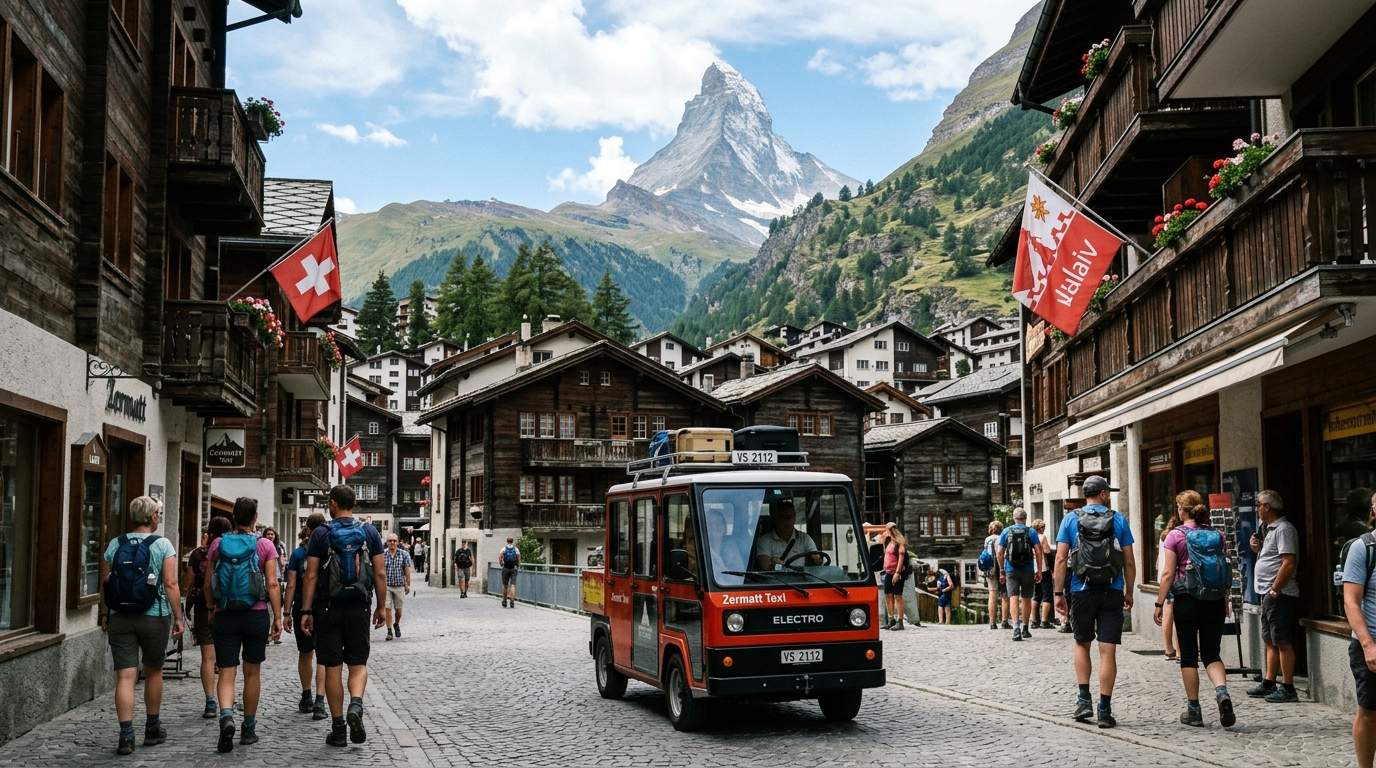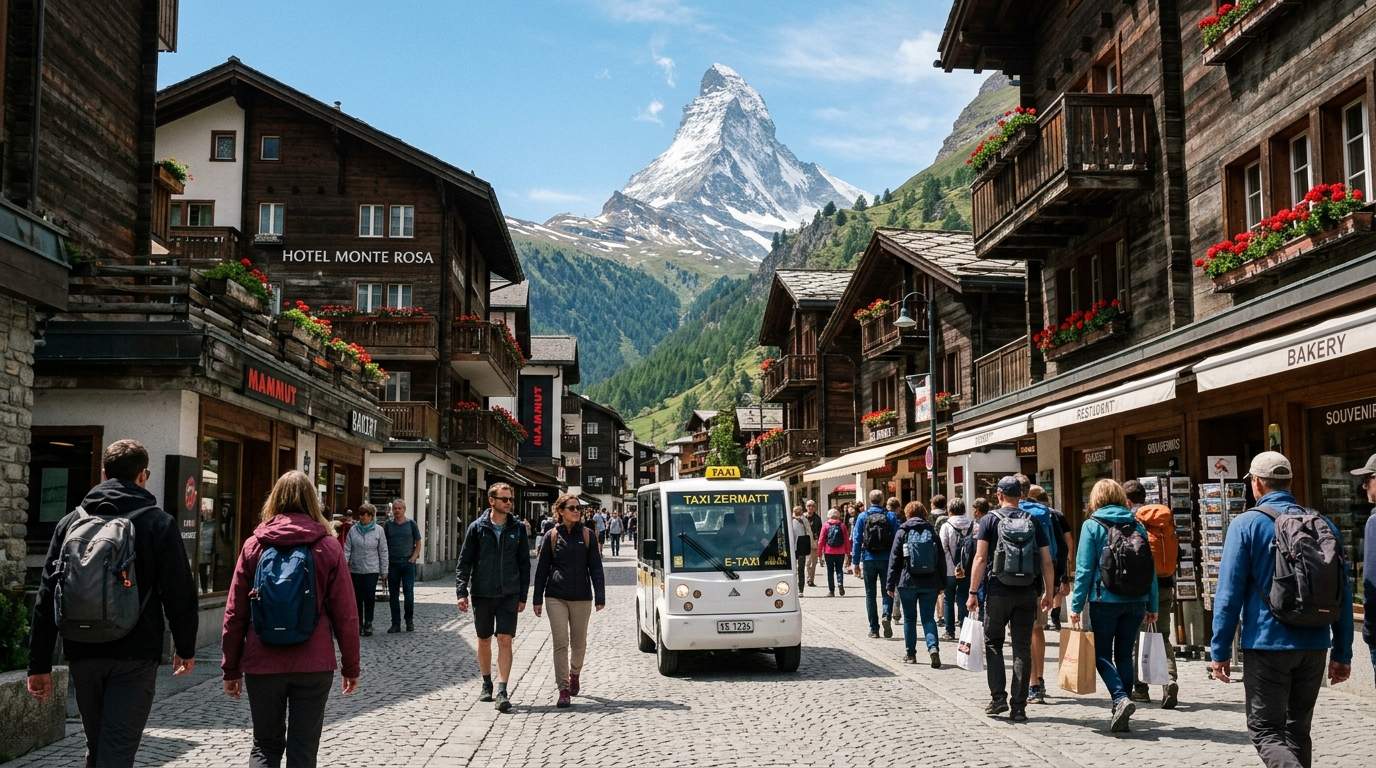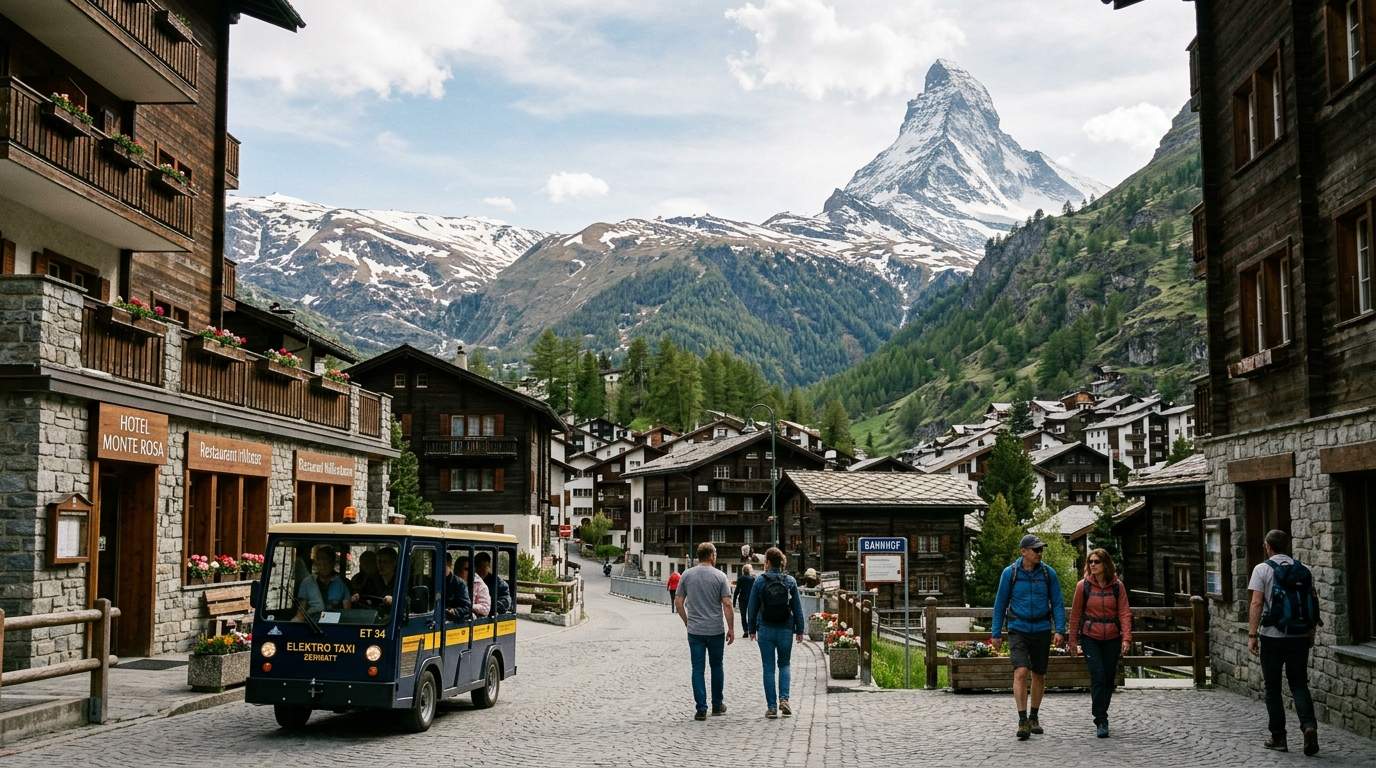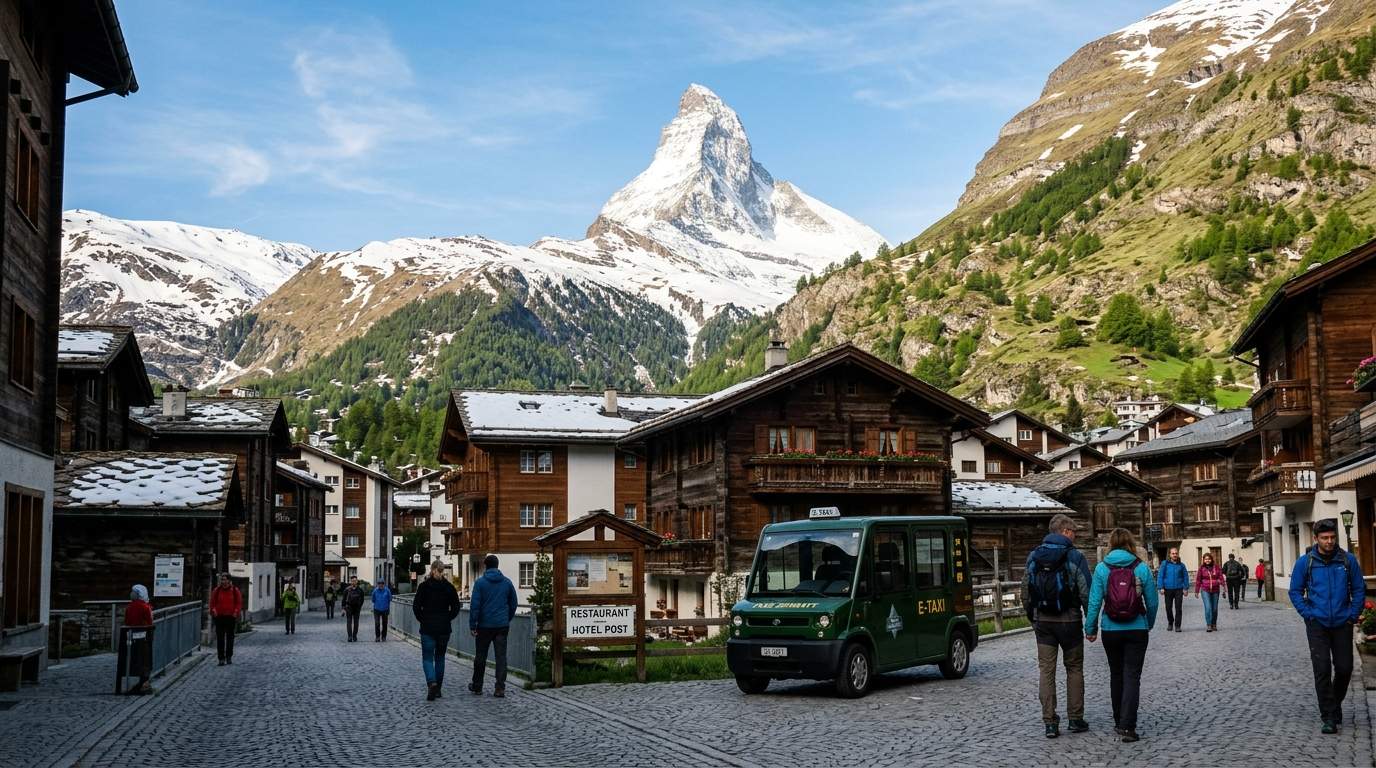
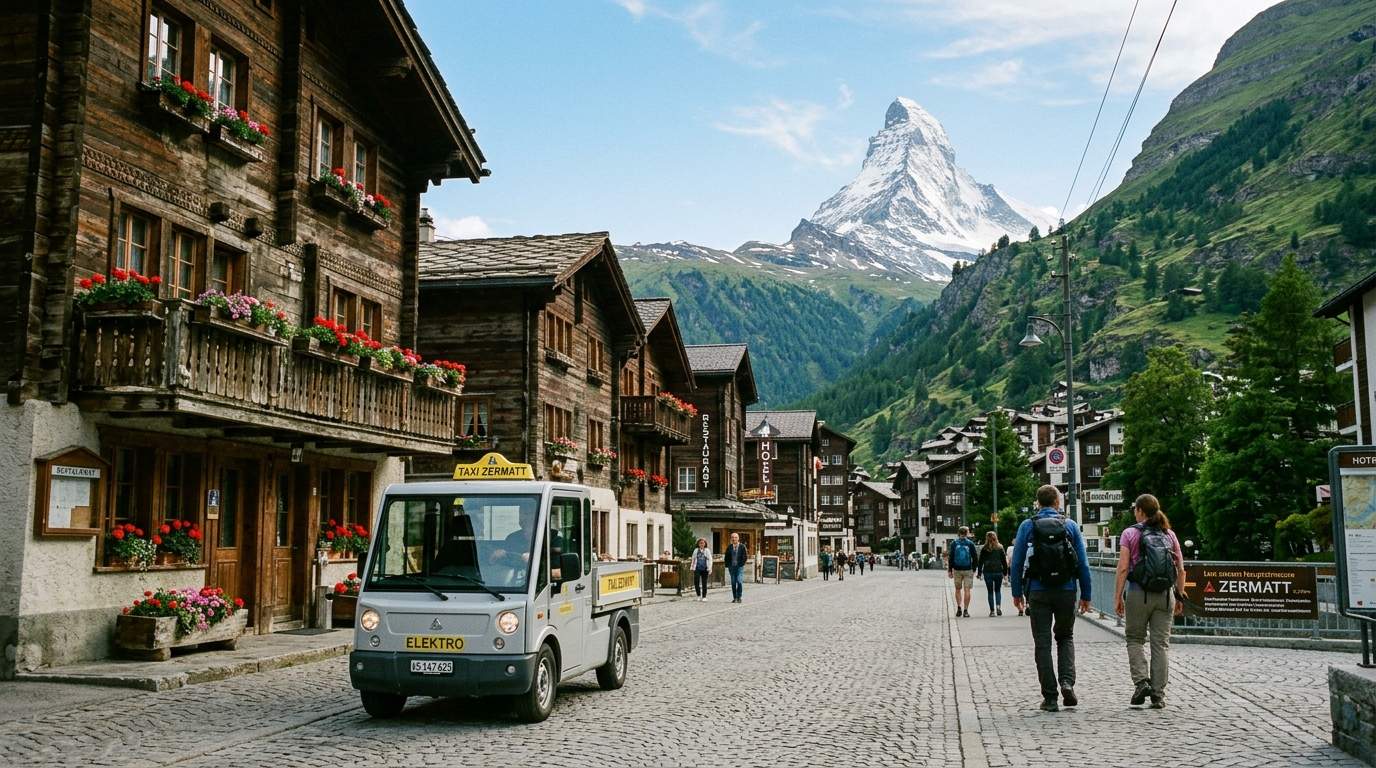
To keep the air crystal clear, Zermatt banned all combustion engines back in 1966. You have to park your car miles away and take a train in, where the only vehicles allowed are tiny, silent, box-shaped electric taxis that look like they belong in a 1970s sci-fi movie. Stepping off the train and into Zermatt for the first time feels less like arriving in a quaint Swiss village and more like disembarking onto a pristine, futuristic colony on a distant, oxygen-rich planet. There's an immediate, almost unsettling quiet, punctuated only by the distant cowbells and the hushed murmurs of fellow travelers. It's a dramatic, delightful contrast to any other town in the Alps, and it’s a policy that completely reshapes your understanding of what an “Alpine resort” can be.
This enforced quiet isn't just a quirk; it's the very soul of Zermatt, and it comes with a price tag, both literal and metaphorical. For American travelers, the journey to this car-free haven typically involves a long-haul flight to Zurich or Geneva, followed by a scenic but multi-hour train ride. If you drove in Switzerland, you’d leave your vehicle in Tasch, the last accessible town, then pay for a 12-minute shuttle train ride into Zermatt itself. This train, while efficient, adds a layer of cost and time to your arrival. Those charming electric taxis? They’re handy for luggage, but even a short ride can set you back a pretty penny, making walking a budget-conscious default. It’s an investment in the experience, but don’t arrive expecting anything to be cheap here.
Visiting Zermatt between March and June offers a fascinating spectrum of experiences, often with fewer crowds and more dynamic scenery. Early spring (March-April) still embraces winter's chill, transforming the landscape into a dazzling, snow-covered wonderland. This is prime time for late-season skiing or snowboarding, often with crisp bluebird days and softer snow. However, pack layers; the weather can be fickle, oscillating between brilliant sunshine and sudden snow showers. This shoulder season can sometimes yield slightly better deals on accommodation, a rare commodity in Zermatt, but don’t count on significant discounts.
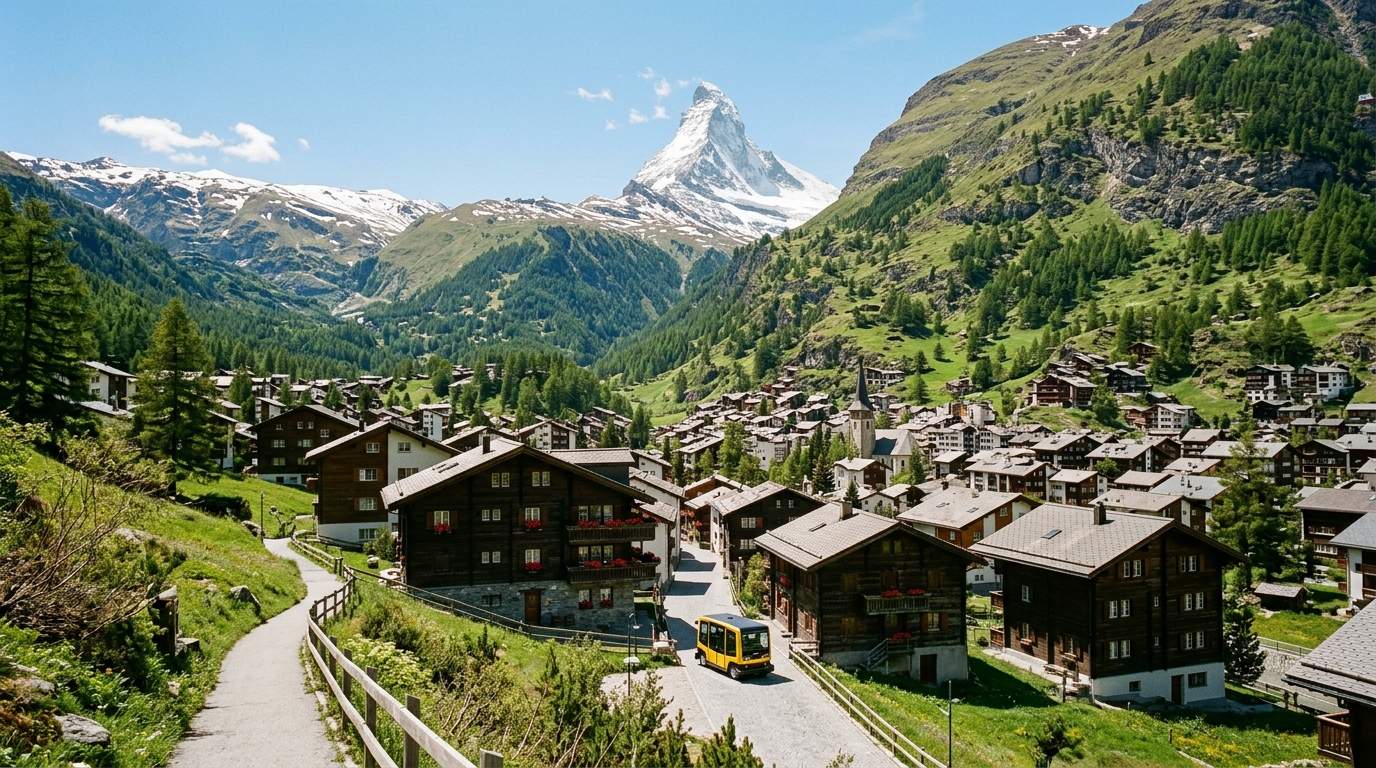
As May transitions into June, the snow recedes from the valley floor, revealing vibrant green meadows dotted with wildflowers, while the higher peaks, including the iconic Matterhorn, retain their majestic snowcaps. This period is a hiker's paradise, as trails begin to open, offering breathtaking views without the peak summer crowds. Be aware that some high-altitude trails might still be inaccessible due to snowmelt, so check conditions locally. The air is still incredibly fresh, but the warmth of the sun makes exploring far more comfortable than in the depths of winter. The contrast between snow-covered peaks and blooming valleys is truly special, almost a visual metaphor for the transition of the seasons.
A common pitfall for first-timers is underestimating the actual cost of daily life in Zermatt. Switzerland consistently ranks among the most expensive countries, and Zermatt, being a premium destination, pushes those limits further. A simple coffee can be $5-7, and a basic restaurant meal easily $30-50 per person. To navigate this financial reality, consider staying in Tasch, the town just down the valley. While it means an added daily train commute, accommodation there can be significantly cheaper, offering a practical trade-off for a rational budget traveler. Another money-saving tip: leverage local supermarkets like Migros or Coop for picnic lunches and self-catering dinners, turning your lodging into a makeshift culinary base.
Beyond the postcard-perfect Matterhorn views, Zermatt harbors some lesser-known gems. While the Gornergrat Railway is famous for its panoramic views, consider an early morning ascent to beat the crowds, or, during May-June, hike a section of the "Five Lakes Walk" from a higher station for different perspectives. For a more intimate Matterhorn experience, take the cable car up to Schwarzsee Paradise. Often overshadowed by the more popular Gornergrat, Schwarzsee offers stunning reflections of the Matterhorn in its small lake, an atmospheric chapel, and quieter, accessible walking paths around the base of the mountain. It feels more meditative and less tourist-trodden.
Another truly overlooked experience is delving into the Matterhorn Museum Zermatlantis. Tucked underground, it’s far more engaging than a typical dusty museum. It tells the fascinating, often tragic, story of Zermatt’s mountaineering history, including the first ascent of the Matterhorn and the perils faced by early climbers. It offers vital context to the colossal peak looming above, and it’s a perfect retreat on a rare rainy day. Finally, take time to wander through Zermatt’s Hinterdorf, the old village. This collection of sun-blackened wooden barns and houses, dating back to the 16th and 18th centuries, provides a glimpse into the traditional, rustic life of the valley. It’s free, authentic, and a stark contrast to the modern luxury chalets, often missed by those focused solely on the peaks.
The myth that Switzerland is exclusively for the ultra-wealthy is tempting to believe when you see Zermatt’s prices. While it’s certainly not cheap, it’s not entirely out of reach for the financially aware American traveler. Strategic planning – choosing shoulder season (March-June offers a great balance), utilizing public transport passes, and self-catering – can make it manageable. The ban on cars, initially seeming like an inconvenience or an indulgence, becomes Zermatt’s defining characteristic, a silent testament to a commitment to preservation. It's a costly pilgrimage, yes, but the payoff of pristine air, unparalleled quiet, and a truly unique Alpine atmosphere makes you understand exactly why no one talks about its car ban as a negative. It's not a restriction; it's the very secret to its magic.