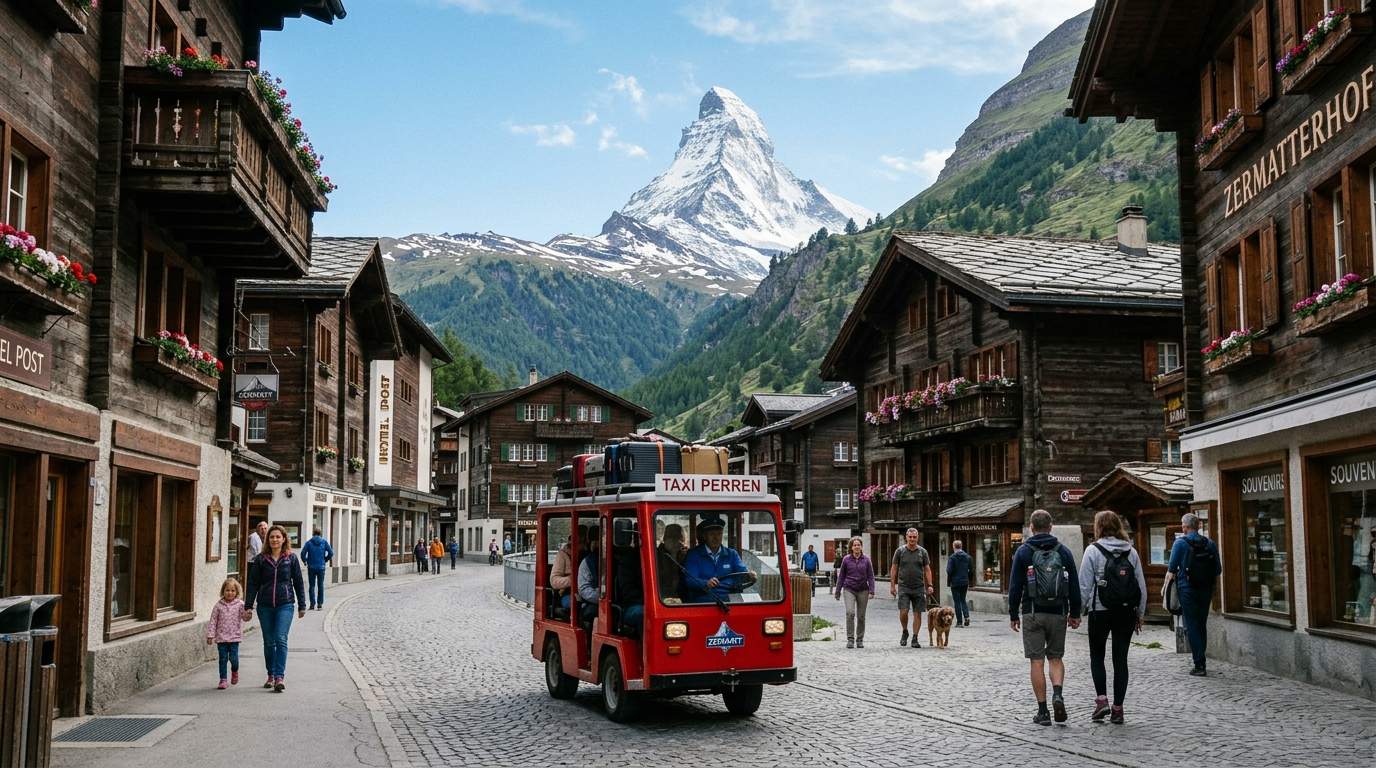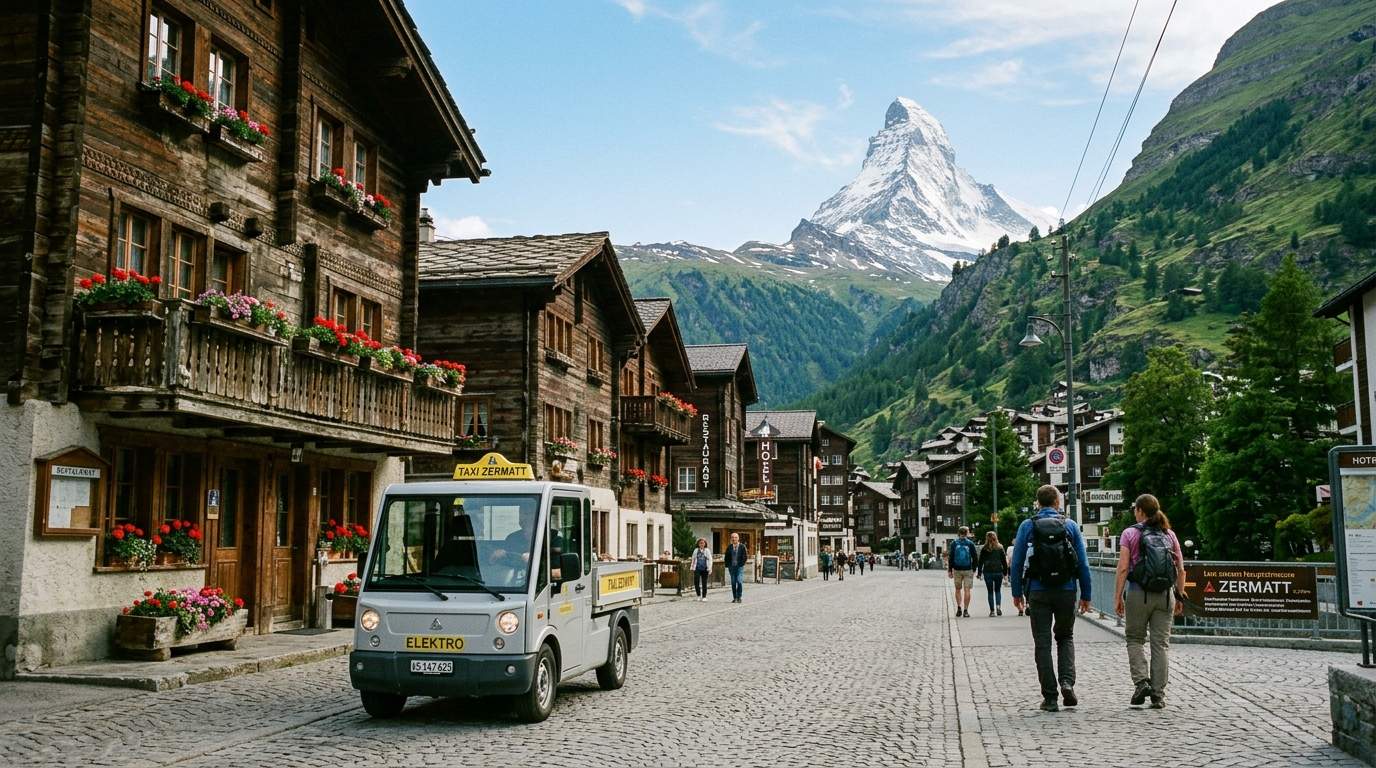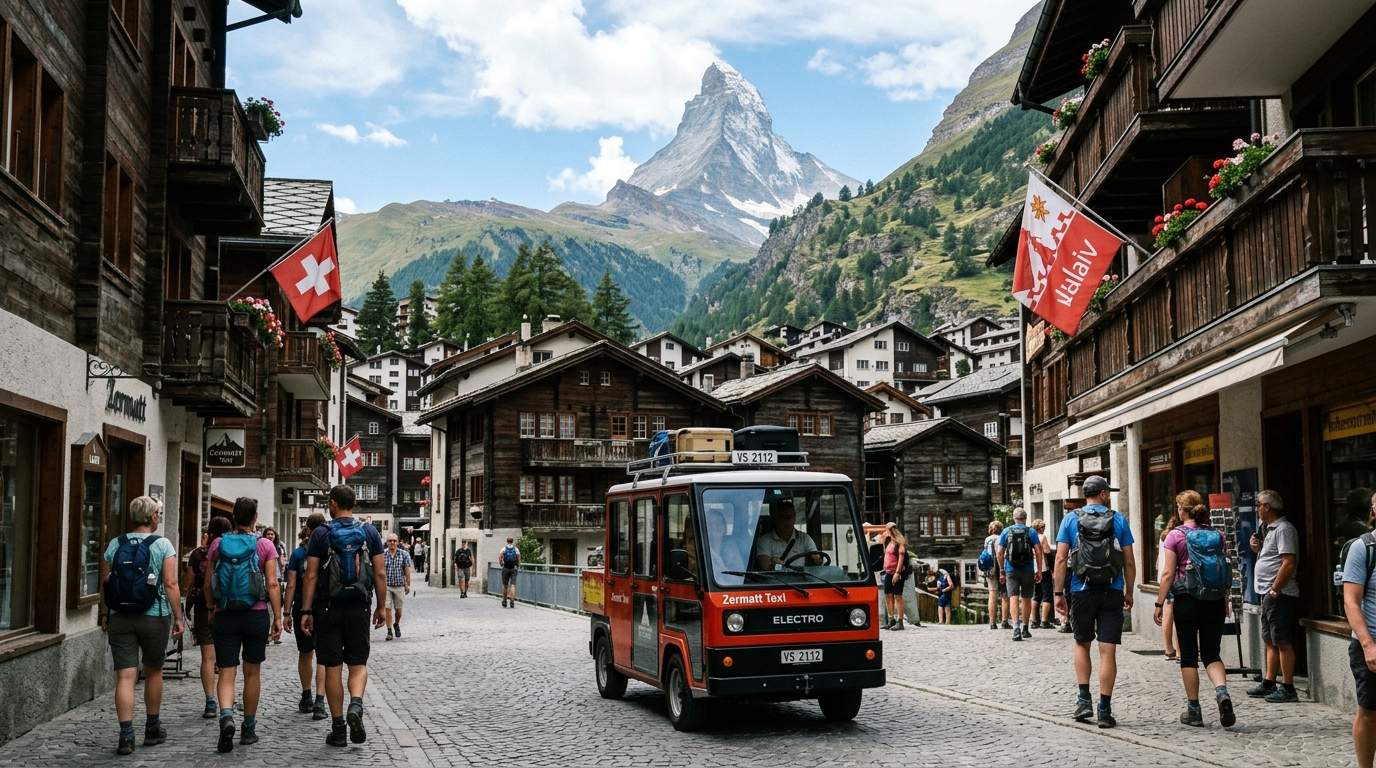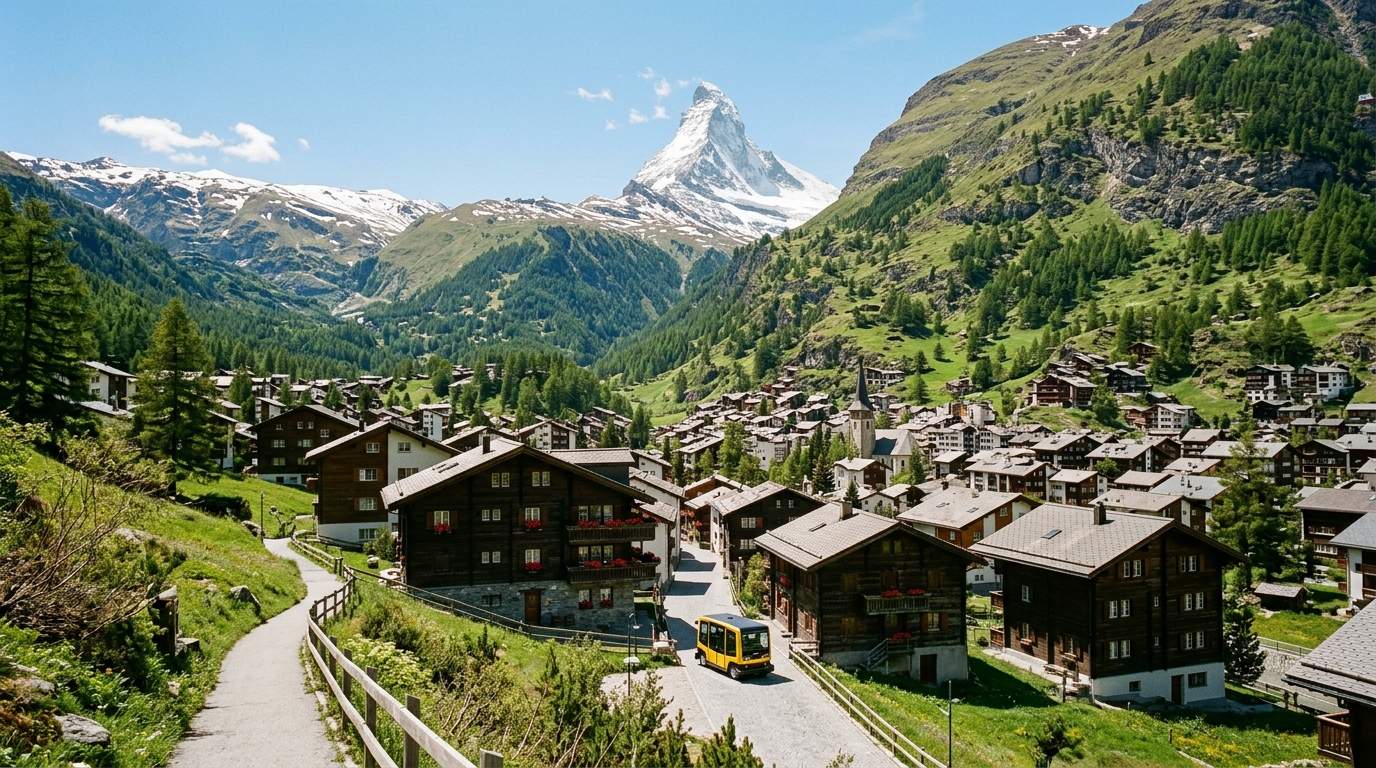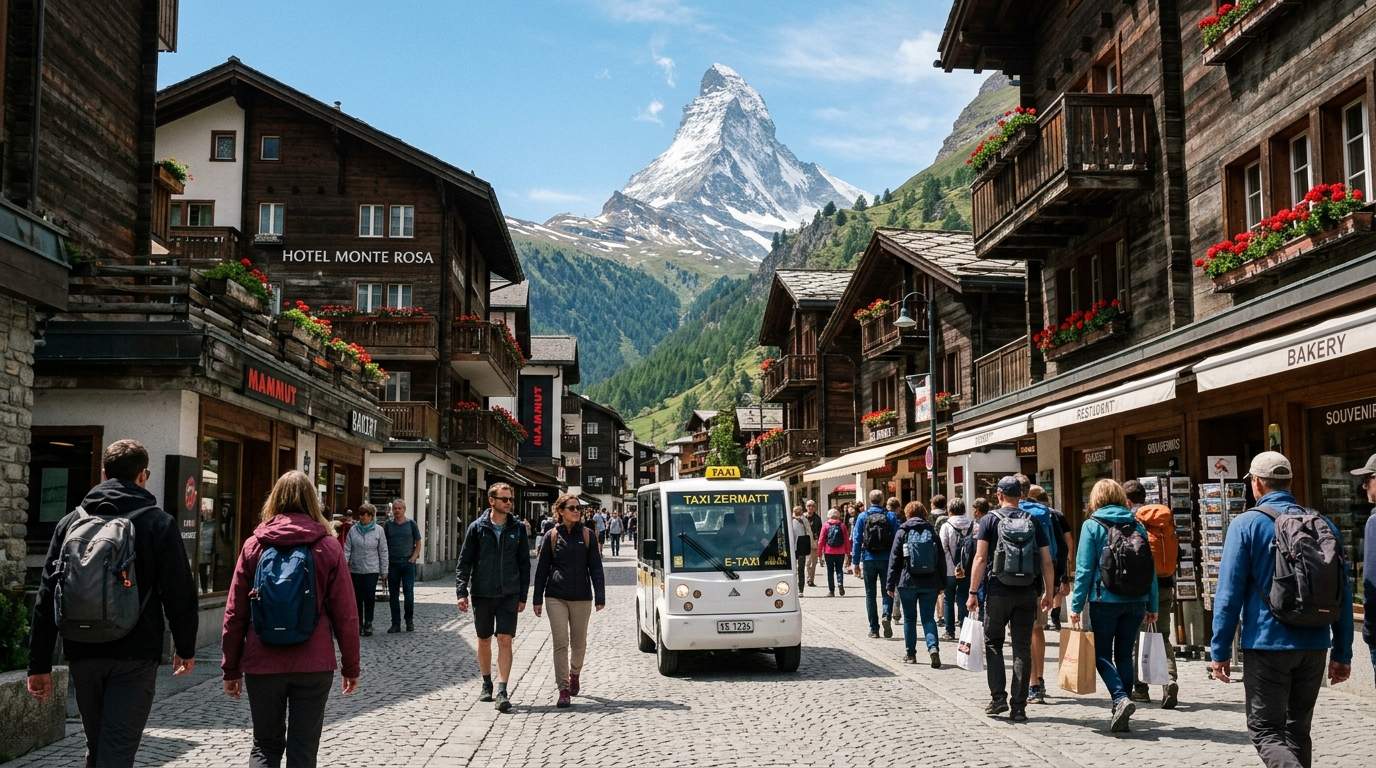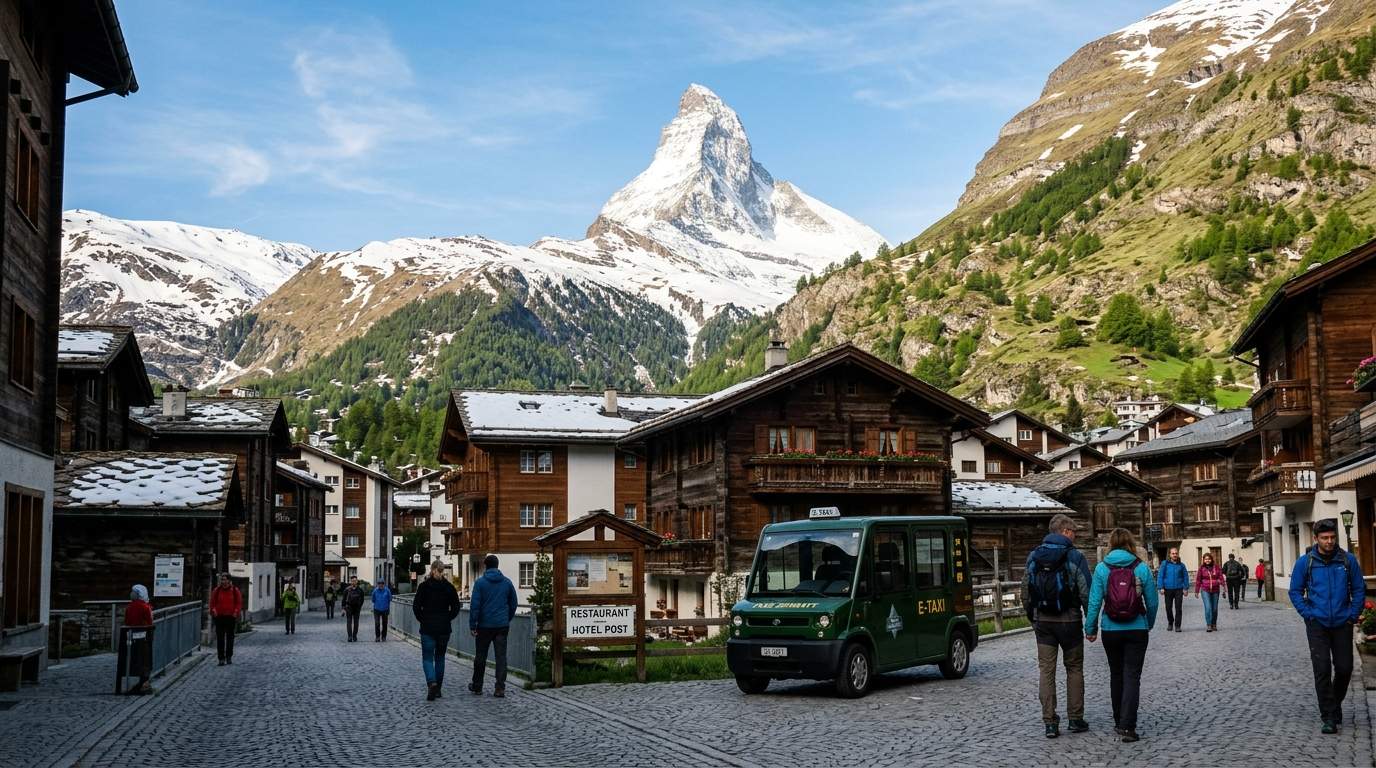
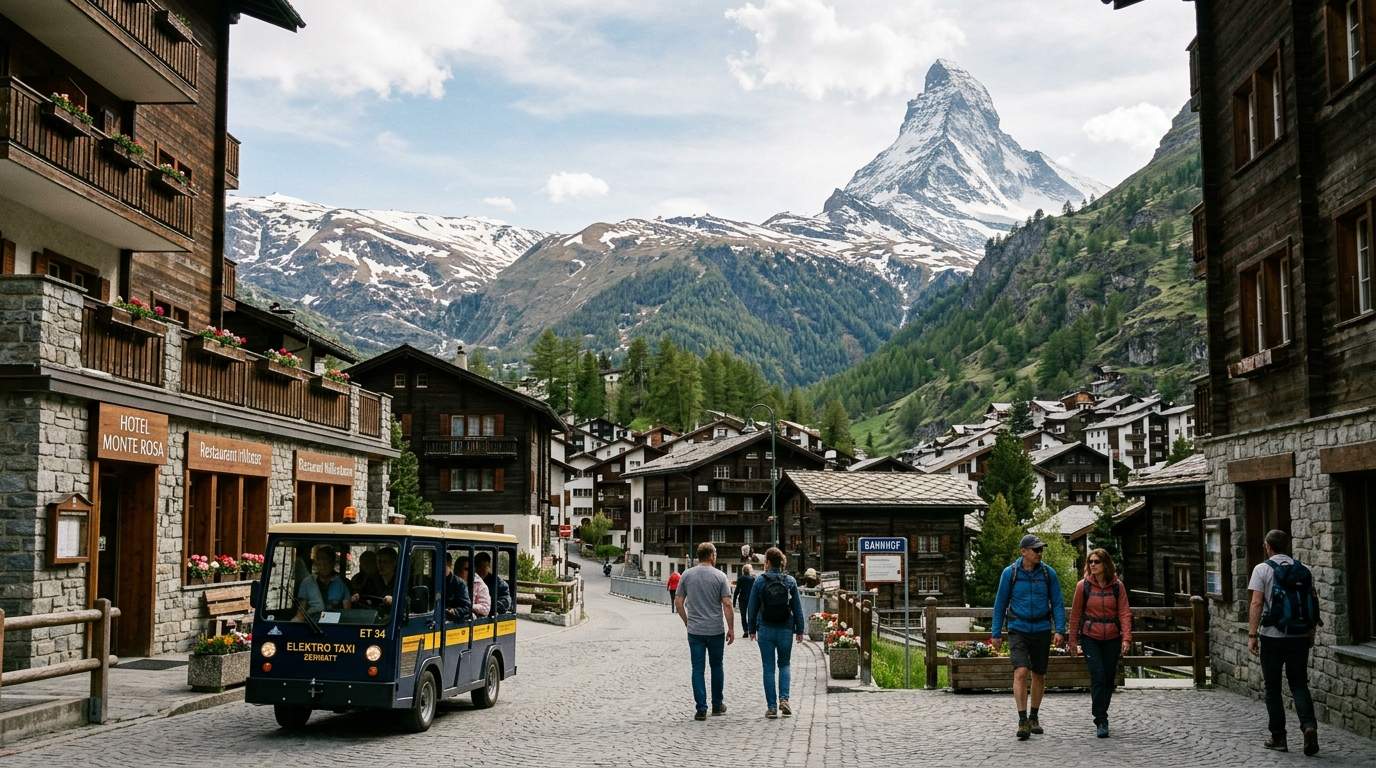
To keep the air crystal clear, Zermatt banned all combustion engines back in 1966. You have to park your car miles away and take a train in, where the only vehicles allowed are tiny, silent, box-shaped electric taxis that look like they belong in a 1970s sci-fi movie. This isn't just a local quirk; it’s a non-negotiable law that will hit your wallet harder than you might expect, turning what seems like a simple drive into an unexpected logistical puzzle.
American travelers typically fly into Zurich (ZRH) or Geneva (GVA), then embark on a scenic, lengthy train journey. A direct flight to Zurich, for instance, clocks around 8-9 hours from the East Coast, followed by a 3.5-4 hour train ride to Visp. There, you switch to the regional train for Zermatt, a final leg winding through the valley. This idyllic scene, however, has a distinct caveat: any rental car dreams end definitively in Täsch, the last point of road access. You’ll pay a steep daily fee to park your vehicle before boarding a shuttle train for the final 15-minute ride into Zermatt.
Once you arrive, the silence is almost unnerving, a stark contrast to the diesel hum of most ski towns. Those aforementioned electric taxis, looking like oversized toasters on wheels, are your primary paid transport for luggage or tired legs, ferrying guests between the station and hotels. But Zermatt is best explored on foot, and it's free. The village is compact, easy to navigate, and the lack of vehicle noise amplifies the sound of cowbells and distant waterfalls, creating an almost meditative atmosphere. It’s a tangible benefit of the car ban, proving environmental mandates can genuinely enhance the visitor experience, albeit with a logistical hurdle.
March still feels like winter, offering some of the best spring skiing with fewer crowds than peak season. Days are longer, and while temperatures hover around freezing, the sun feels surprisingly warm, ideal for budget-conscious skiers eyeing slightly lower lift pass and accommodation prices towards month-end. As April melts into May, the village transitions. Ski lifts begin to shut, trails reappear, and wildflowers emerge. This "off-season" unveils Zermatt’s quieter side, perfect for solitude and dramatic landscapes without the throng. Expect lower lodging prices, but also be prepared for some restaurant closures and fewer activities, particularly at higher elevations where snow still reigns. By June, summer hiking season is in full swing, more high-altitude trails accessible, but prices also climb, heralding larger summer crowds.
To keep your Swiss adventure from becoming a financial freefall, smart planning is crucial. Accommodation is notoriously expensive; consider staying in Täsch and commuting daily by train for significant savings. Alternatively, seek out guesthouses or hostels slightly off Zermatt’s main tourist drag. Food is another major cost; a simple restaurant meal often hits $30-50 per person. My advice? Hit local Coop or Migros supermarkets. Stock up on bread, cheese, and cured meats for picnic lunches. Many accommodations offer kitchenettes—a godsend for self-catering. Skip bottled water; Zermatt’s tap water is pristine.
Beyond the iconic Matterhorn panoramas, Zermatt offers some truly compelling, less-trodden paths. Start with a serene morning stroll through Hinterdorf, the old village. Here, traditional Valaisian wooden houses and barns, many centuries old and built on mushroom-shaped stone pillars, offer a quiet, atmospheric glimpse into Zermatt’s agrarian past, far removed from the bustling Bahnhofstrasse. Next, immerse yourself in the natural artistry of the Gorner Gorge. Accessible by a pleasant walk or short electric bus ride, this deep, narrow canyon carved by the Gorner River offers a dramatic contrast to open mountain vistas. Wooden walkways and staircases cling to the rock face, allowing you to walk above churning turquoise waters, an experience both ancient and exhilarating.
For a unique perspective and to beat the crowds, consider an early morning ascent to Sunnegga. Take the underground funicular just after sunrise; the air is crisp, and the Matterhorn often catches the first golden light. While many flock to Gornergrat, Sunnegga offers stunning views without the same human traffic, especially if you arrive early. Finally, don't overlook the Matterhorn Museum Zermatlantis. This subterranean museum dives deep into the history of mountaineering in Zermatt, chronicling the first ascent of the Matterhorn, its tragic accidents, and the village’s evolution. It’s a surprisingly engaging and poignant experience, providing vital context to the imposing peak—perfect for a rainy day or when higher trails are still snowbound.
Switzerland is expensive, and Zermatt is no exception. Flights from the U.S. can range from $700-$1500 round trip. Add $150-$250 for the round-trip train ticket from Zurich/Geneva to Zermatt. Budget $150-$250 per night for a decent hotel ($60-$100 for hostels). Factor in $50-$100 daily for food (mostly self-catering with occasional treats) and another $50-$100 for lift passes or activities. My "costly lesson" wasn't just the parking in Täsch, but realizing every convenience in Zermatt comes with a premium. The car ban isn’t just about clean air; it’s a fundamental part of Zermatt’s identity, dictating how you arrive, move, and ultimately, how much you spend.
Zermatt is a testament to preservation, a place where nature's grandeur is amplified by the absence of modern machinery. The initial inconvenience of parking miles away melts as you breathe pure mountain air and gaze at the iconic Matterhorn, unmarred by exhaust fumes or traffic jams. It’s a destination demanding patience and a willingness to embrace its unique rules, but in return, offers an authentic, awe-inspiring Alpine experience unlike any other. This is a place where you truly earn your views, and the payoff is absolutely priceless.