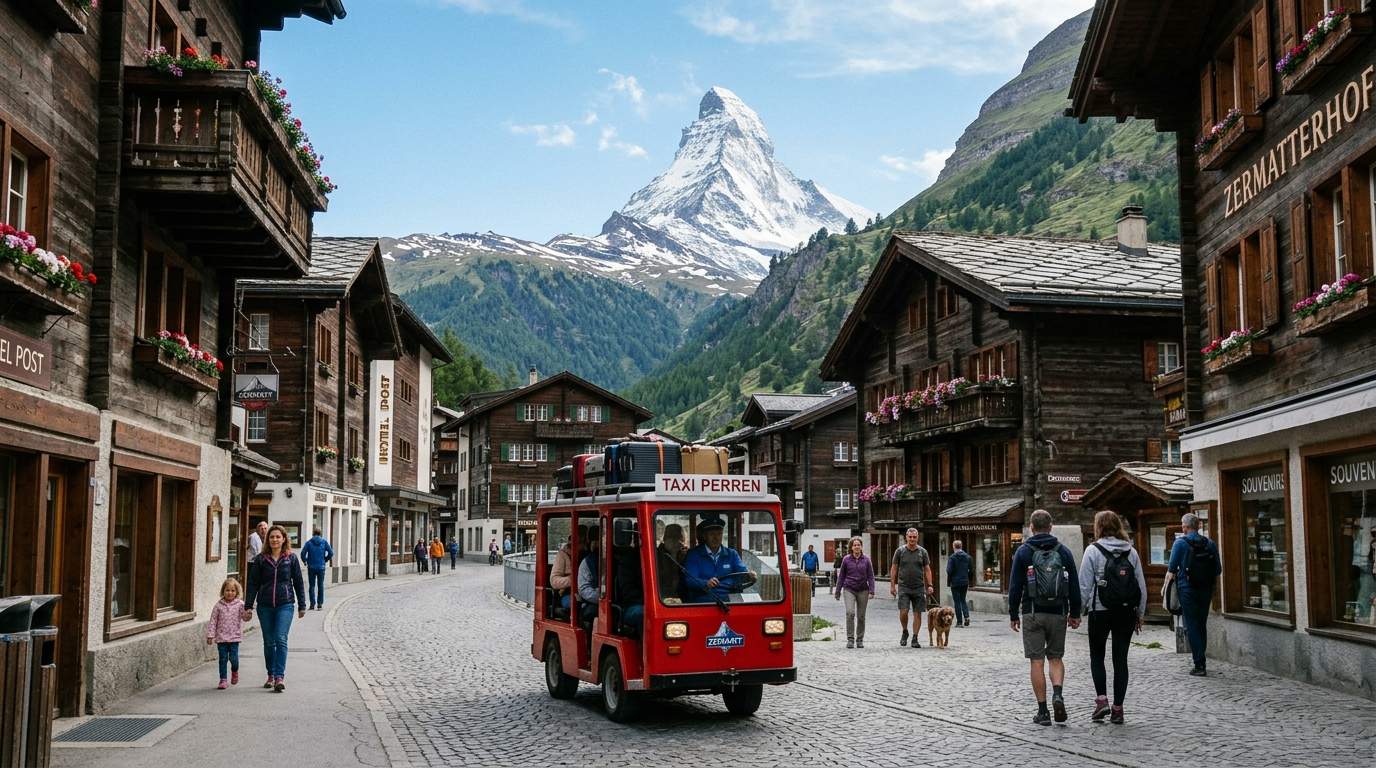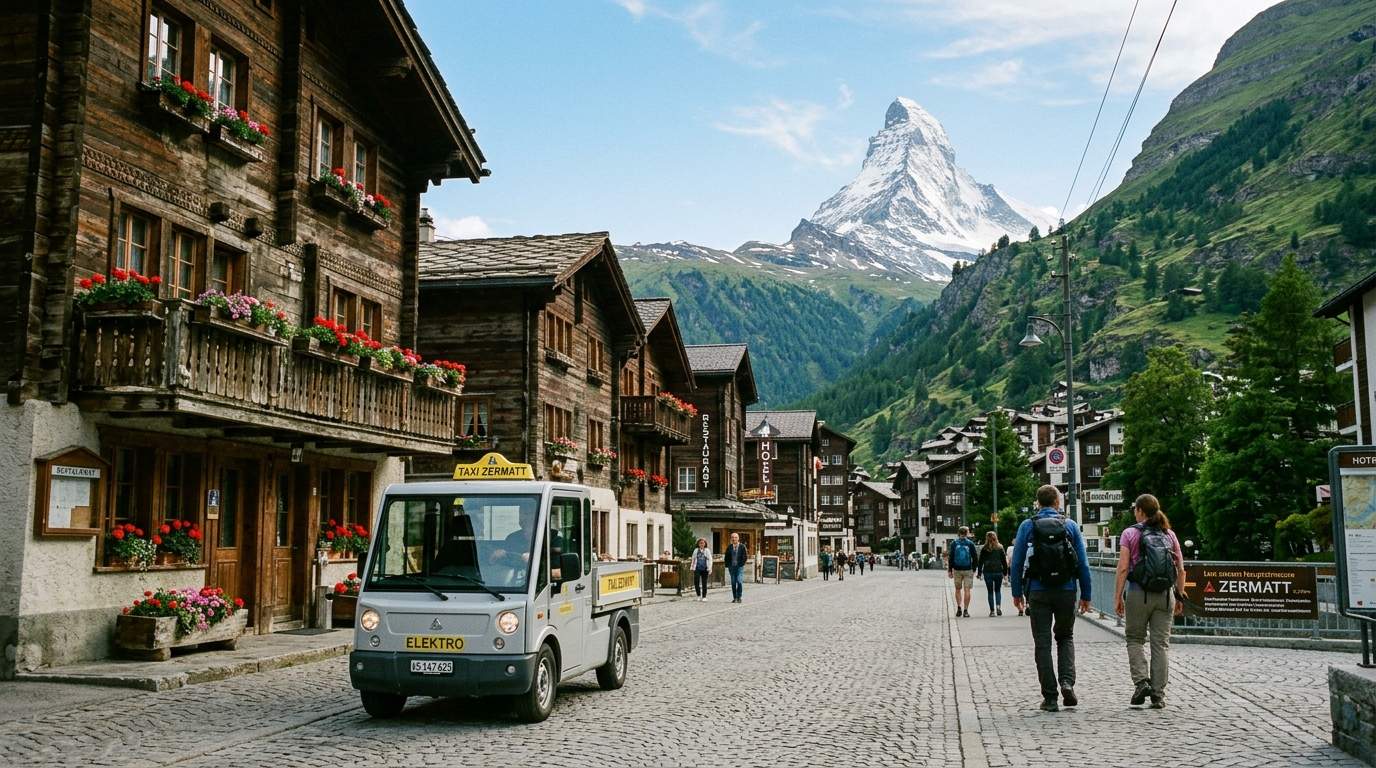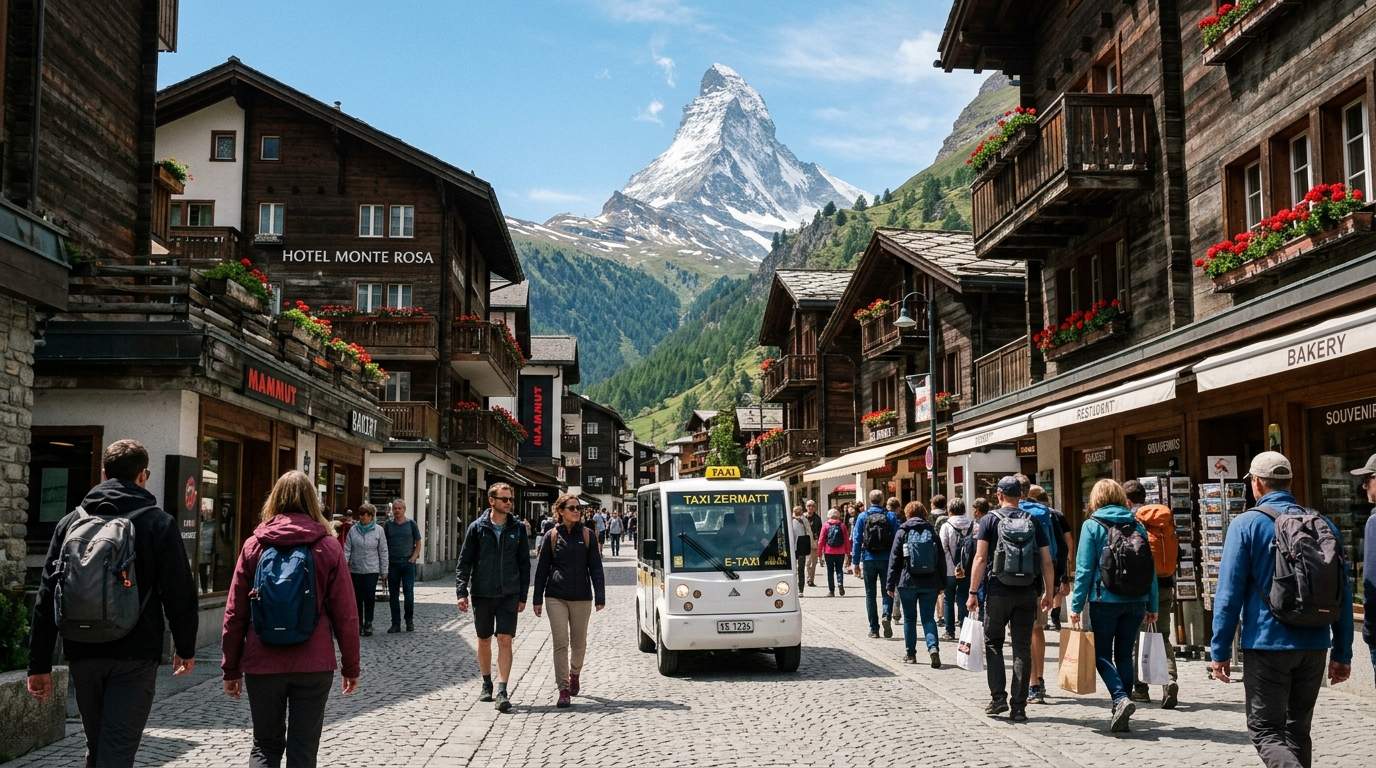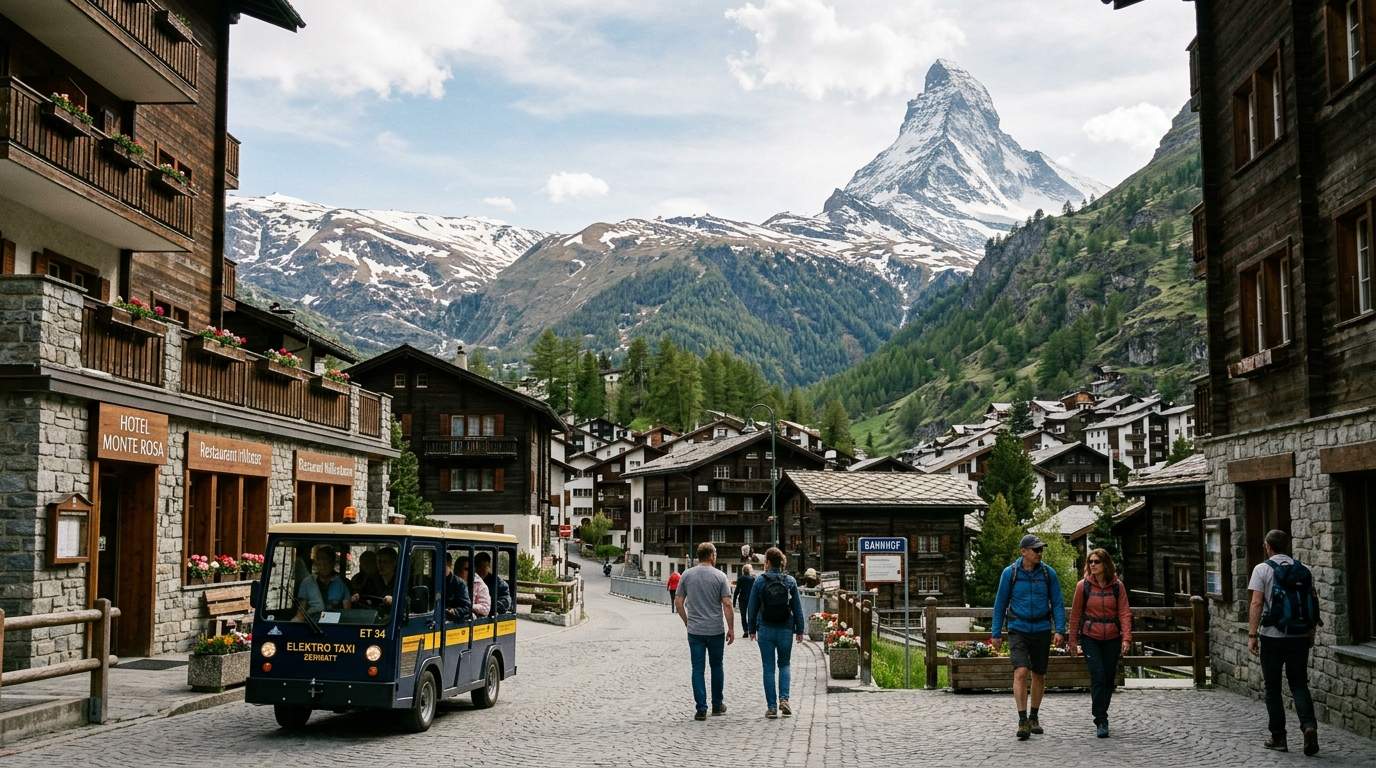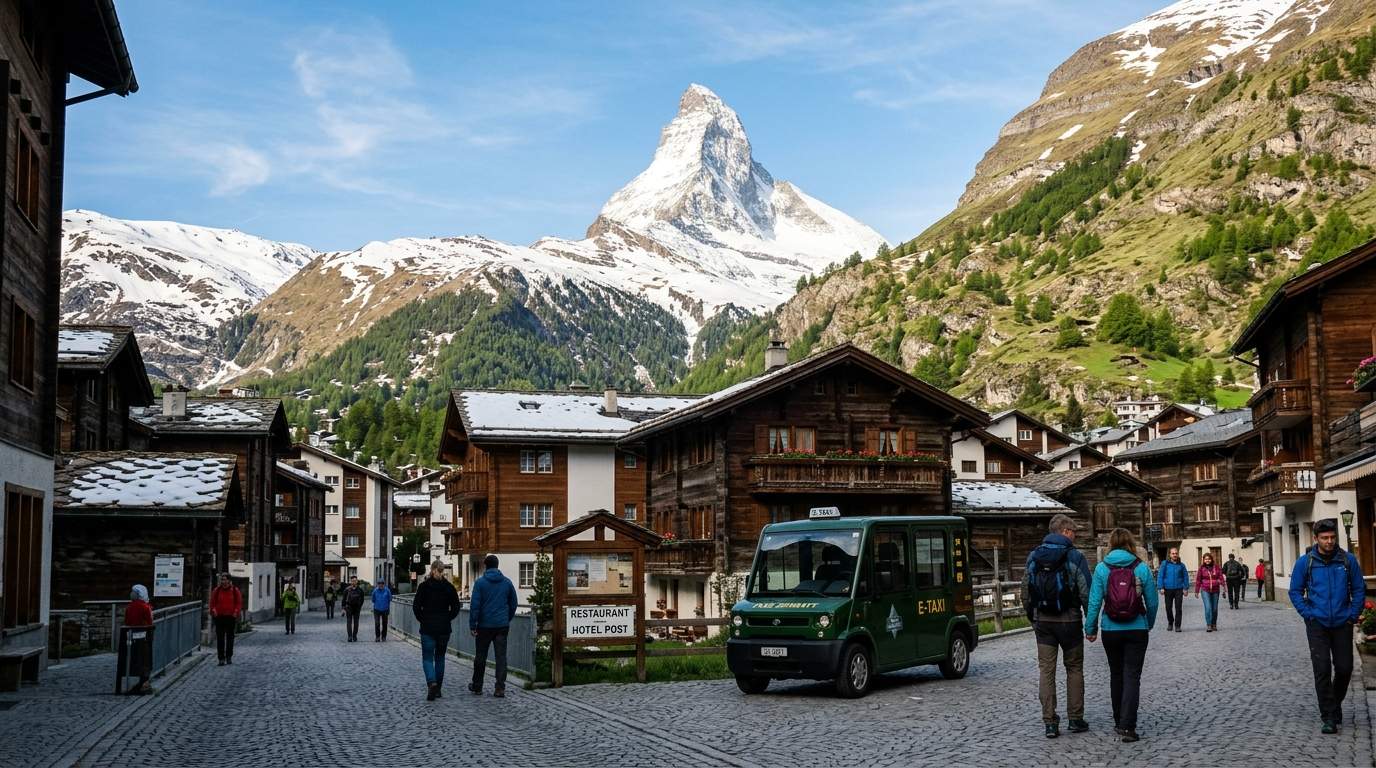
To keep the air crystal clear, Zermatt banned all combustion engines back in 1966. You have to park your car miles away and take a train in, where the only vehicles allowed are tiny, silent, box-shaped electric taxis that look like they belong in a 1970s sci-fi movie. This rule, enforced for decades, is the first real shock for most American travelers used to driving right up to their hotel. It's also the single most important piece of information for planning your trip, and it sets the stage for a uniquely serene, if slightly inconvenient, Swiss Alpine experience. You won't just arrive in Zermatt; you'll transition into it.
The journey itself is part of the Zermatt charm, or rather, the Zermatt challenge. Your own vehicle stops dead in Täsch, a small town five kilometers down the valley. From there, you're loading your luggage onto a shuttle train for a scenic 12-minute ride, or if you're feeling particularly Swiss-authentic (and the weather cooperates), a lovely uphill hike. Parking in Täsch isn't cheap – expect to pay around 16 CHF ($18) per 24 hours. The train ticket is another 8.60 CHF ($9.50) round-trip. Suddenly, you've spent nearly $30 before you’ve even seen the Matterhorn. This is your first financial lesson in Switzerland: every convenience has a price. My advice? Embrace the train; it’s part of the decompression. When you step off, the air genuinely feels different, crisper, without the constant hum of traffic.
Once in Zermatt, those electric taxis become your main mode of transport, unless you’re walking. They're adorable and efficient but also surprisingly expensive, often charging 20-30 CHF ($22-33) for a short ride to your accommodation. If your hotel offers a complimentary pickup (many do, but you must arrange it in advance), take it. Otherwise, save your money and walk. Zermatt is compact enough that most places are within a 15-20 minute stroll. This is especially true if you’re traveling in March or April, when the cobblestone streets can be icy, and those tiny taxis are navigating slick turns. Speaking of March and April, don’t expect full-blown hiking season; these months are still firmly in spring skiing territory, meaning snow can linger on lower trails.
For those visiting between May and June, Zermatt transforms. The snowline recedes, revealing emerald valleys and the first wildflowers. This is the sweet spot for budget-conscious hikers: fewer crowds than peak summer, and many lower-to-mid-altitude trails begin to open. A hidden gem often overlooked is the Gorner Gorge. It's a short walk from the village and for a few francs (around 5 CHF or $5.50), you can explore a dramatic, cool canyon carved by the Gornera river. It’s an easy, fascinating diversion that feels worlds away from the bustling main street, and it offers stunning photography opportunities without the massive price tag of a mountain excursion.
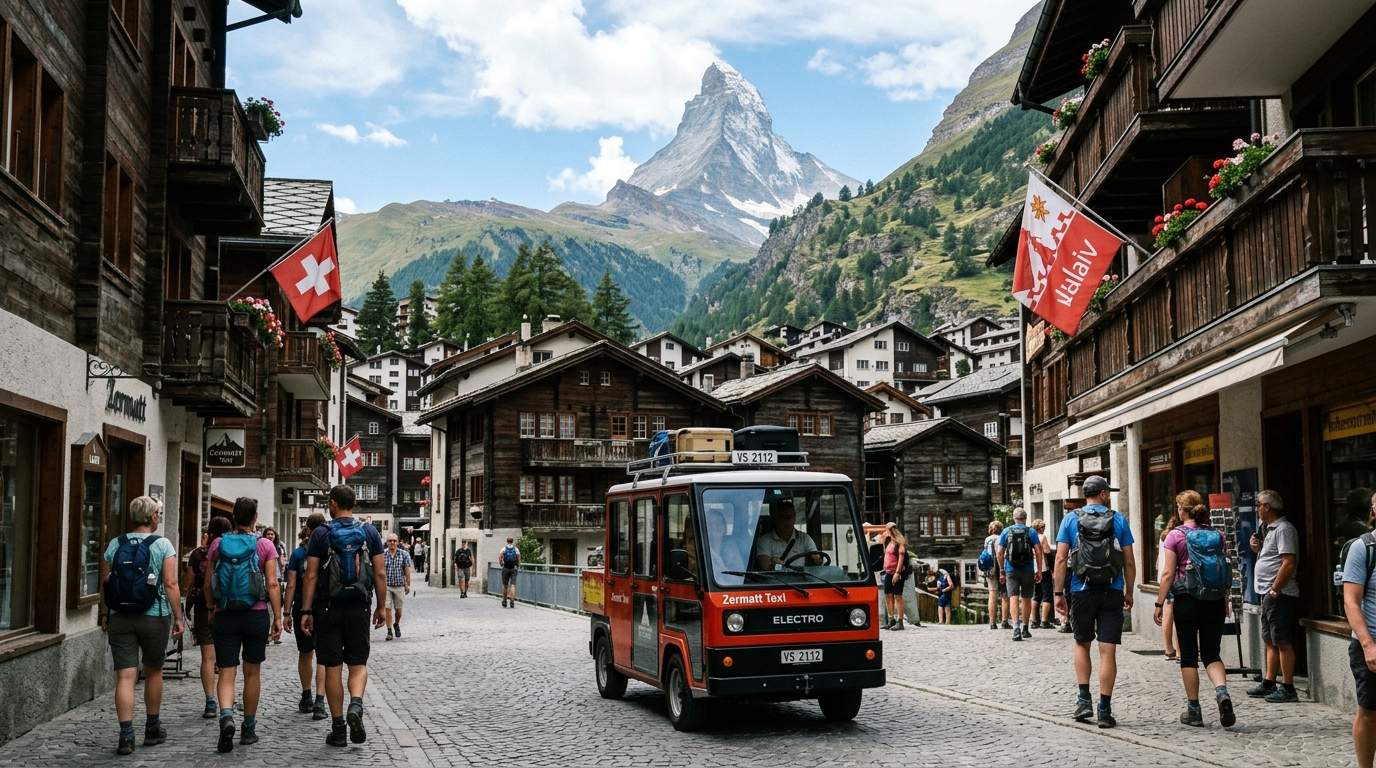
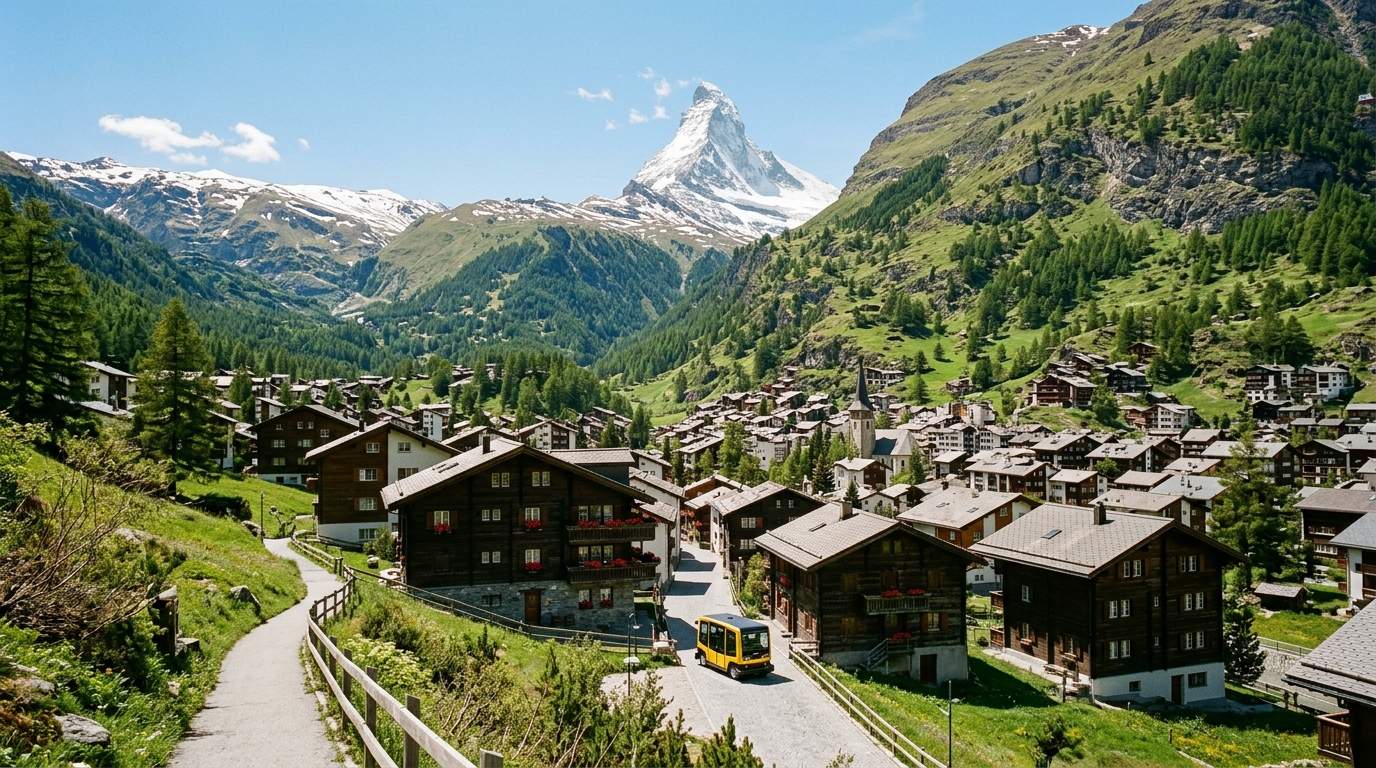
Another worthwhile, lesser-known experience for early summer visitors is a walk to the picturesque hamlet of Zmutt. It’s a gentle, approximately 45-minute uphill stroll from Zermatt, passing through serene meadows and past traditional wooden chalets. The views of the Matterhorn from Zmutt are sublime, often framing the peak in a unique, pastoral setting that postcards rarely capture. There’s a rustic restaurant there, but for a true budget move, pack a sandwich and a thermos of hot tea (purchased from a Coop or Migros supermarket, of course) and enjoy a picnic with one of the most iconic backdrops on Earth. This simple pleasure costs virtually nothing beyond your provisions, a sharp contrast to the 30+ CHF ($33+) you’d drop on a plate of rösti at a mid-range Zermatt eatery.
Don’t fall into the trap of eating every meal out. Zermatt is notoriously expensive for food. A typical sit-down dinner can easily run you 60-80 CHF ($66-88) per person. My top money-saving tip: leverage the excellent Swiss supermarkets. Coop and Migros in Zermatt are well-stocked and offer high-quality, ready-to-eat meals, fresh bread, cheeses, and charcuterie at a fraction of restaurant prices. If your accommodation has a kitchenette, utilize it. For breakfast, make your own coffee and toast. For lunch, pack sandwiches for your hikes. This strategy can slash your daily food budget by 50% or more, letting you splurge on one memorable experience, like a ride up the Gornergrat train – which, while pricey (over 100 CHF/$110 round-trip without a Swiss Travel Pass), offers unparalleled Matterhorn views and is worth every franc, especially on a clear day.
Actual travel time from the U.S. typically involves an 8-10 hour flight to Zurich or Geneva, followed by a 3-4 hour train journey, including transfers. It’s a long haul, so factor in jet lag and consider flying into Geneva if Zermatt is your primary destination, as the train route through the Valais region is particularly stunning. March and April can see unpredictable weather – anything from bluebird ski days to heavy spring snowfalls, and even rain in the village. May and June offer more stable, warmer weather, though high-altitude cloud cover can still obscure the Matterhorn without warning. Always pack layers: good waterproof outerwear, hiking boots, and sun protection are essential, even in late spring, as the Alpine sun at altitude is fiercely strong.
Ultimately, Zermatt forces you to slow down, to walk, and to truly breathe in the mountain air. The car ban, far from being an inconvenience, becomes a fundamental part of its charm, a testament to a town committed to preserving its pristine environment. It's not a destination for the spontaneous road-tripper, but for those willing to embrace its unique rules, Zermatt offers an unforgettable, crystal-clear slice of the Alps, minus the exhaust fumes and constant traffic noise. It makes you realize that sometimes, the best way to move forward is to leave your car behind.